
Uranium’s Cost Curve Is Broken — And the Market May Still Be Underestimating the Supply Gap
October 30, 2026
Uranium_ den stora bilden

Mike Alkin argues that depleted inventories, fading secondary supply and sharply rising mining costs are reshaping uranium price formation.
By Lucijan Valkovic | Triangle Investor
Based on a conversation with Mike Alkin of Sachem Cove Capital Management and his October 2026 NEI International Fuel Seminar presentation.

The central question: what happens when the bridge runs out?
For much of the past decade, uranium buyers and market forecasters were able to reconcile reactor demand with available supply by relying on more than current mine production. Commercial inventories were drawn down, while enrichment underfeeding supplied additional uranium-equivalent material to the market. On paper, those sources helped make an increasingly tight market appear adequately supplied—or even oversupplied.
Mike Alkin, founder of Sachem Cove Capital Management, argues that this accounting obscured the underlying balance. Mine production is a recurring flow; inventories are a finite stock. A market can bridge a structural flow deficit by consuming stockpiles, but it cannot do so indefinitely. In his view, the uranium market is approaching the point where the remaining inventory cushion and secondary supply can no longer disguise the weakness in primary supply.
Alkin’s core message at the Nuclear Energy Institute’s 2026 International Fuel Seminar was consistent with the argument he says he made at the same conference in 2018 and 2019: the industry’s cost curve was too low, and the market was underestimating the price required to sustain existing production and incentivize replacement supply.

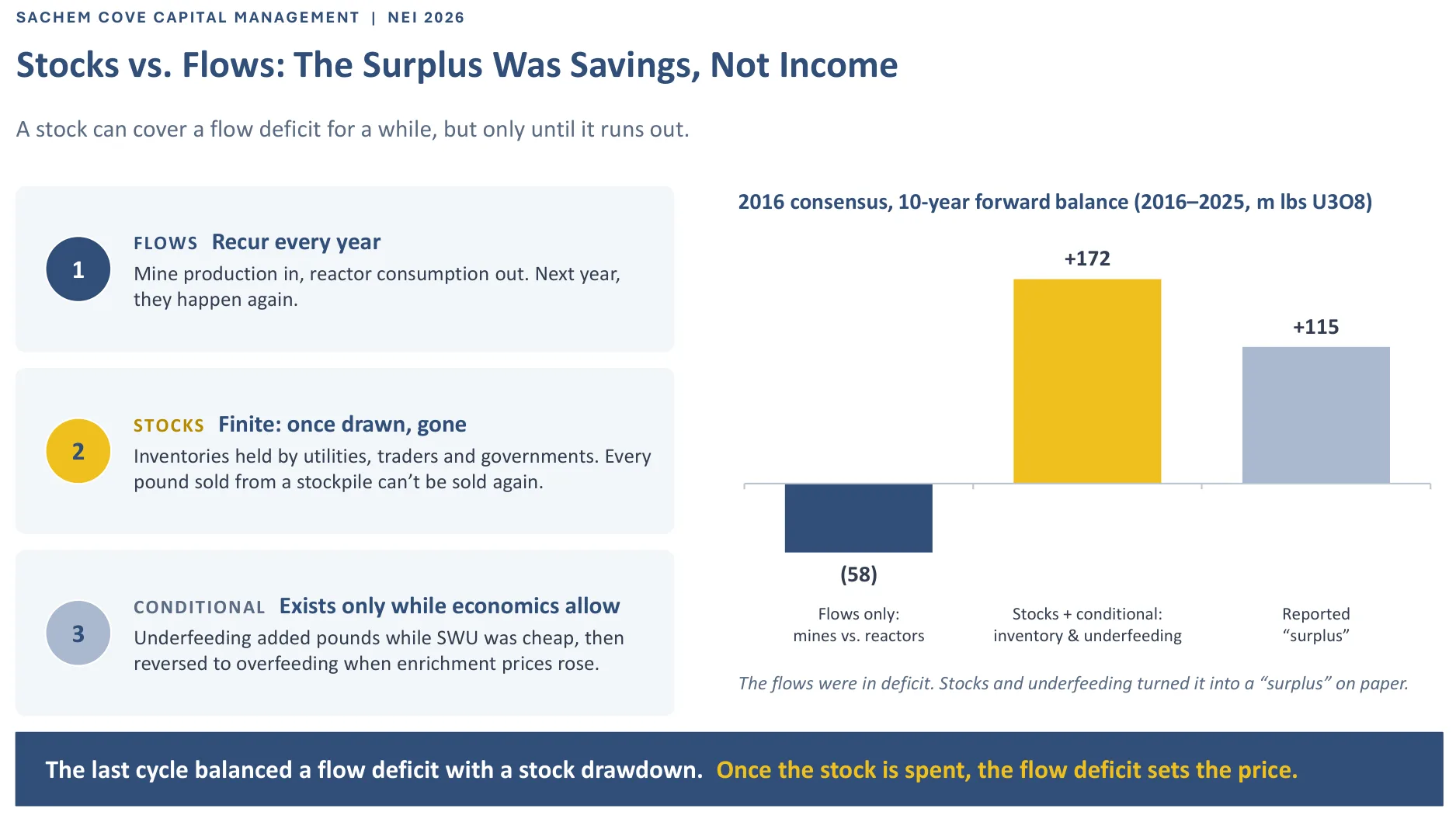
Figure 1. Sachem Cove’s stocks-versus-flows framework: the 2016 consensus showed a 115-million-pound
“surplus” once inventories and underfeeding were included, while the underlying mine-versus-reactor balance was a 58-million-pound deficit. Source: Sachem Cove Capital Management / UxC presentation, slide 4
How a structural deficit became a paper surplus
Alkin revisited the industry’s 2016 outlook. The consensus ten-year forward balance appeared to show a surplus of roughly 115 million pounds of U3O8. But, he explained, that headline number blended recurring mine supply with two sources that were conditional or finite: inventory drawdowns and enrichment underfeeding.
The distinction matters. Mine output is produced again each year, while a pound sold from an inventory stockpile is no longer available to be sold again. Underfeeding, meanwhile, depends on enrichment economics. When enrichment capacity is abundant and separative work unit (SWU) prices are low, enrichers can obtain more uranium from the same feed material. If those economics reverse, underfeeding can decline or turn into overfeeding, potentially increasing uranium feed requirements.
Removing inventory drawdowns and underfeeding from the historical forward balance changes the picture substantially. Sachem Cove’s presentation depicts the underlying flows as being in deficit, even though the combination of flows, stocks and conditional secondary supply produced a reported surplus. Alkin’s conclusion is not that the market’s accounting was necessarily arithmetically wrong; rather, it failed to account adequately for whether the secondary pounds would actually be available at the price and time buyers needed them.
“The last cycle balanced a flow deficit with a stock drawdown. Once the stock is spent, the flow deficit sets the
price.”
That is the framework through which Alkin interprets the uranium market’s evolution from the post-Fukushima period to today. A market can appear well supplied while inventories are available and willing holders are prepared to sell. Once those conditions change, the balance between current production and reactor requirements becomes much more important.
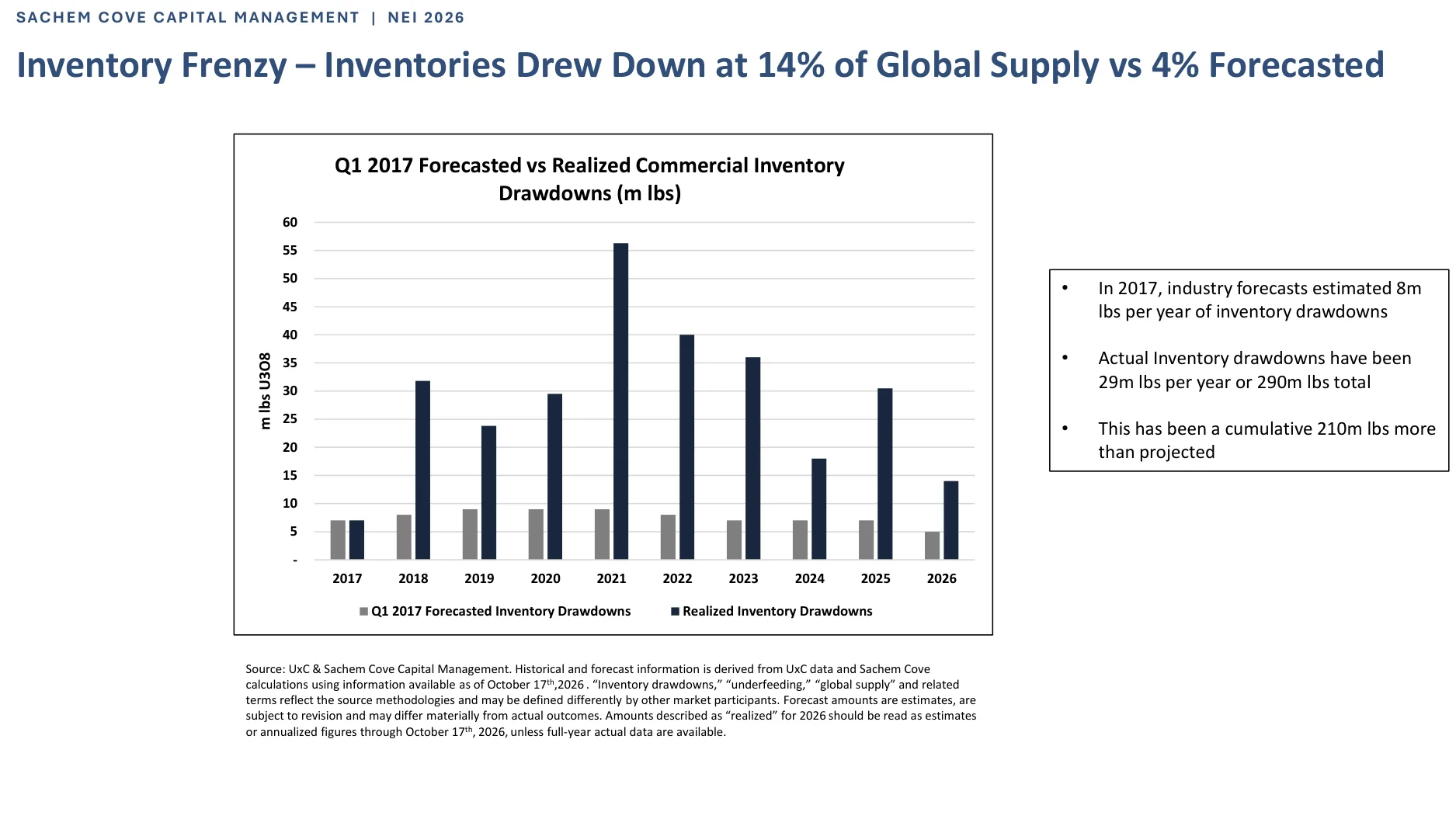

Figure 2. Commercial inventory drawdowns greatly exceeded the 2017 forecast. Sachem Cove estimates actual
drawdowns at about 29 million pounds per year, or 290 million pounds in total, versus an expected 8 million pounds
annually. Figures are based on the presentation’s methodology and data available as of October 17, 2026; 2026
values may be estimates or annualized figures. Source: slide 5.
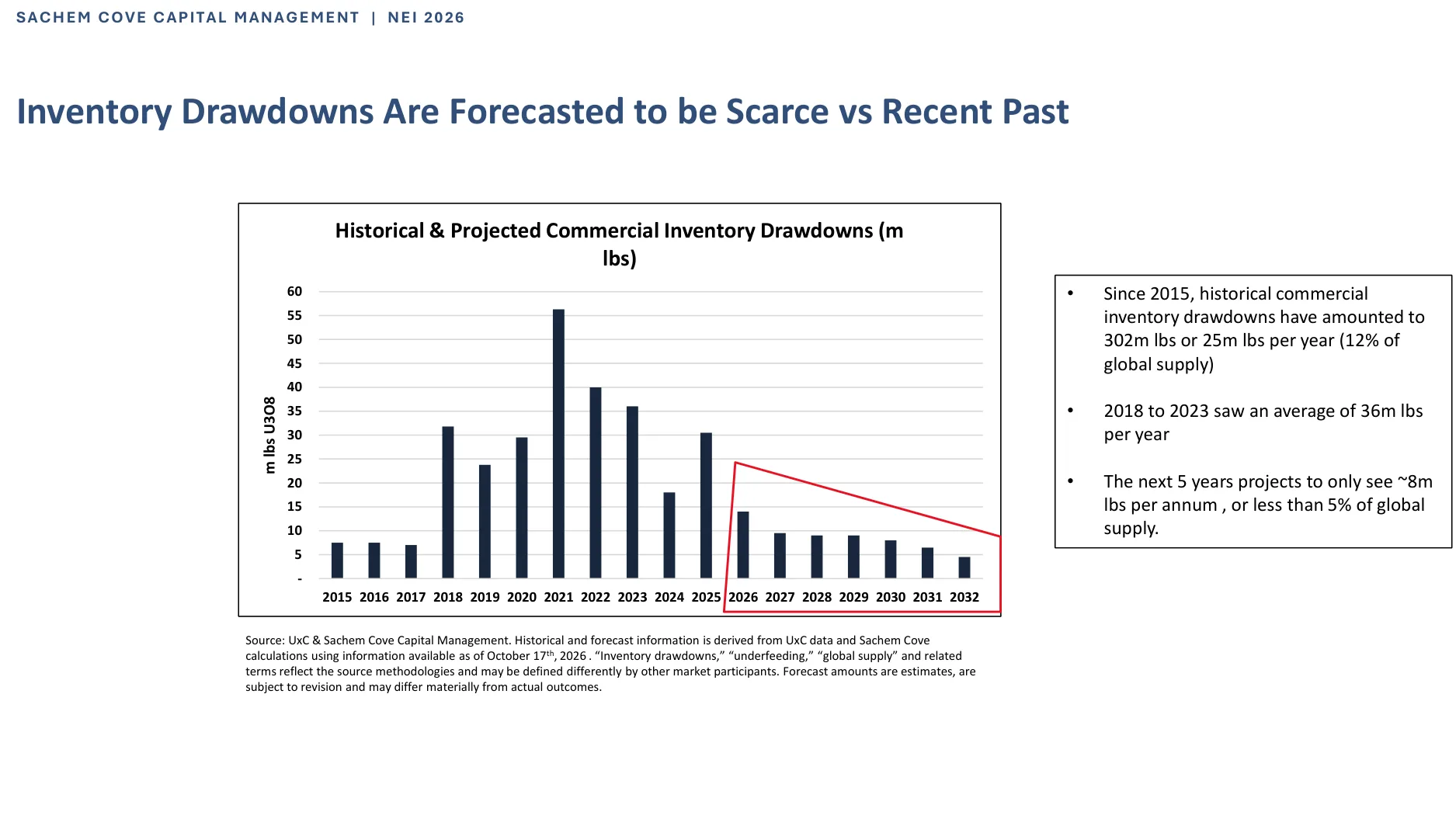
Figure 3. Underfeeding was a meaningful source of supply in the second half of the 2010s but is projected by
Sachem Cove to contribute a much smaller share of global supply over the next five years. Source: slide 7.


Inventories are not all equally available
One of Alkin’s most important qualifications is that headline inventory totals do not tell the whole story. The question is not only how many pounds exist above ground, but who owns them, why they hold them, and what price would persuade them to sell. This is the concept of inventory mobility.
The transcript describes how uranium spot prices rose from roughly US$17–18 per pound at the market bottom to around US$92 during the discussion, while reported long-term contract prices approached or exceeded US$100. These are the price references cited during the interview, not a real-time price update. For Alkin, the price response is evidence that inventories were less mobile than market participants had assumed.
Sachem Cove’s presentation estimates that commercial inventory drawdowns since 2015 amounted to approximately 302 million pounds, or about 25 million pounds annually. It contrasts that history with a projected average of roughly 8 million pounds per year over the next five years. Underfeeding is also expected to be much smaller than it was during 2015–2021. If inventory drawdowns and underfeeding both fade, the market has less flexibility to cover shortfalls. The implication is not that prices must rise in a straight line. It is that the supply stack becomes more dependent on actual mine output and on the price required to elicit additional production.
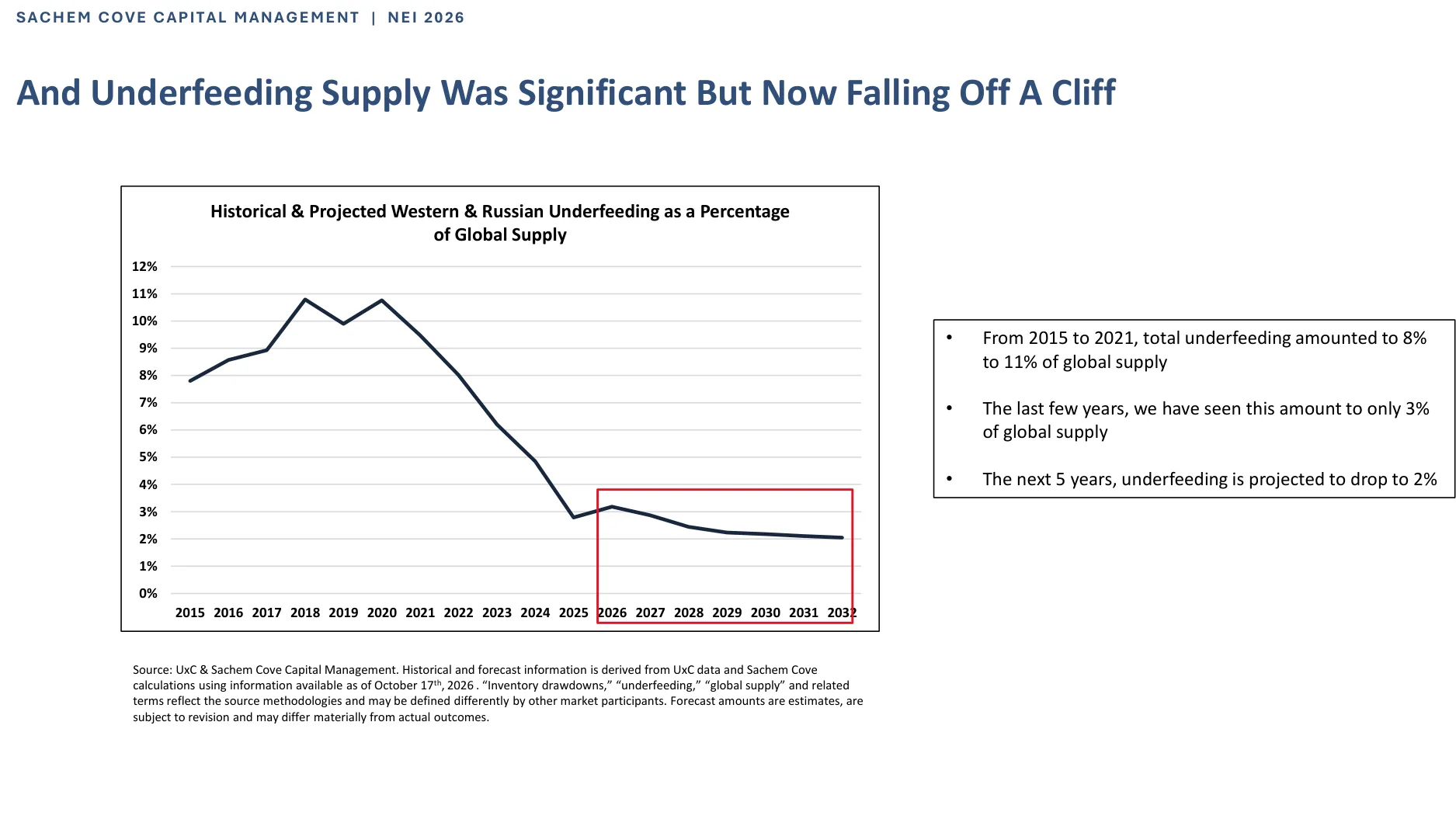
Figure 4. Sachem Cove’s presentation compares historical inventory drawdowns with a much lower projected pace.
The forecast is an estimate and could change as market conditions evolve. Source: slide 6


Why U.S. inventory comparisons can mislead
The interview also challenges the use of U.S. utility inventory levels as a standalone argument that the market is comfortable. Alkin says that comparing current inventory coverage with the previous bull market requires context, particularly the Megatons to Megawatts program.
Under that program, highly enriched uranium from dismantled Russian nuclear weapons was downblended for use as civilian nuclear fuel. Alkin described the arrangement as providing the United States with roughly 20 million pounds of uranium-equivalent supply per year until 2013. Utilities that expected this material to arrive had less reason to hold the same level of inventory or contract for replacement supply.
The present market does not have that same assured stream. Alkin therefore argues that inventory levels that look high in isolation should not be interpreted as proof of future oversupply. Inventory coverage is a snapshot; the more consequential questions are how much supply will be available in coming years, how much demand must be met, and whether inventory holders will release material.
He also points to history. During the 2000s uranium bull market, prices rose substantially before the second Cigar Lake flooding event in 2006, then surged as expectations for new supply deteriorated. Alkin recalls that the forward balance was still being presented as a surplus even after the disruption. In his reading, the episode demonstrates how supply forecasts can fail to capture the market’s sensitivity to delayed projects and the willingness—or unwillingness—of holders to sell.
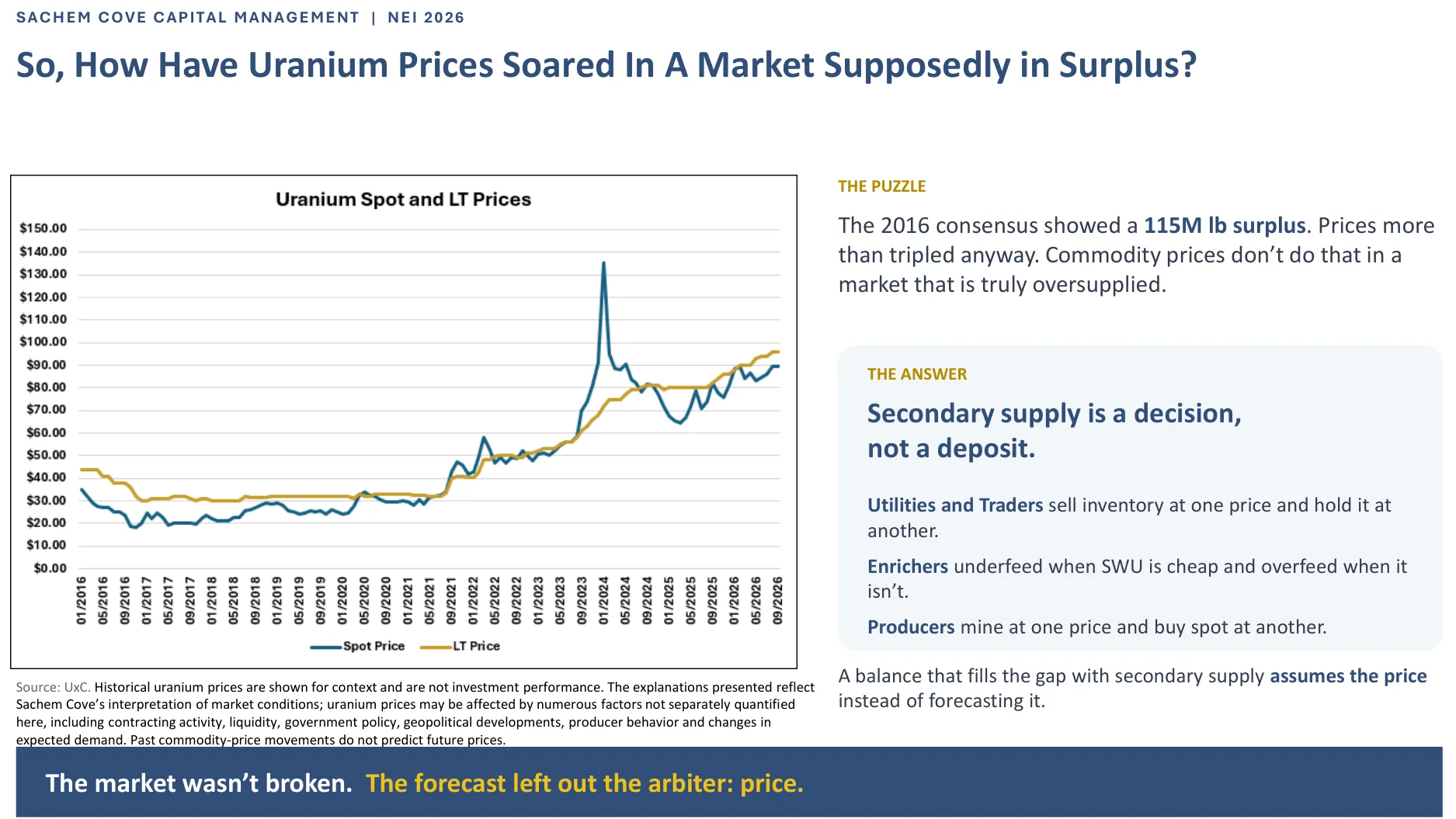
Figure 5. The presentation compares uranium spot and long-term prices with the earlier consensus balance.
Sachem Cove argues that prices rose despite a market widely described as being in surplus. Source: slide 9.


The cost curve: cash cost is not the cost of sustaining a business
Alkin’s second major argument is that the uranium industry’s cost curve has not kept pace with real operating conditions. In his view, cost estimates have often followed uranium prices: when prices were depressed, reported costs appeared to fall; when prices recovered, costs rose. The problem, he argues, is that some of the figures used in supply models capture only a narrow part of the cost of producing uranium.
A cash cost typically captures the direct cost of producing the next pound. An all-in sustaining cost (AISC) should go further, incorporating items such as sustaining capital, corporate overhead, sustaining exploration and reclamation. A full-cycle incentive price must go further still, reflecting the development capital, financing costs and risk-adjusted return required to build a new mine.
The definitions are not uniform across uranium companies, which makes comparisons difficult. A project can advertise a low operating cost while leaving out important expenses needed to keep the business operating, maintain production, replace reserves, fund permitting or finance future development. Alkin argues that cost curves based on incomplete or inconsistent definitions can understate the price needed to sustain the industry.
“You can’t run a mine if you can’t afford to run a company.”
The distinction also affects the supply response. A mine may be technically capable of producing uranium at a stated cash cost, yet still fail to generate enough cash to sustain the operation or justify the capital needed for expansion. For new projects, the price needed to justify construction may be higher than the cost figures most commonly cited in market commentary.
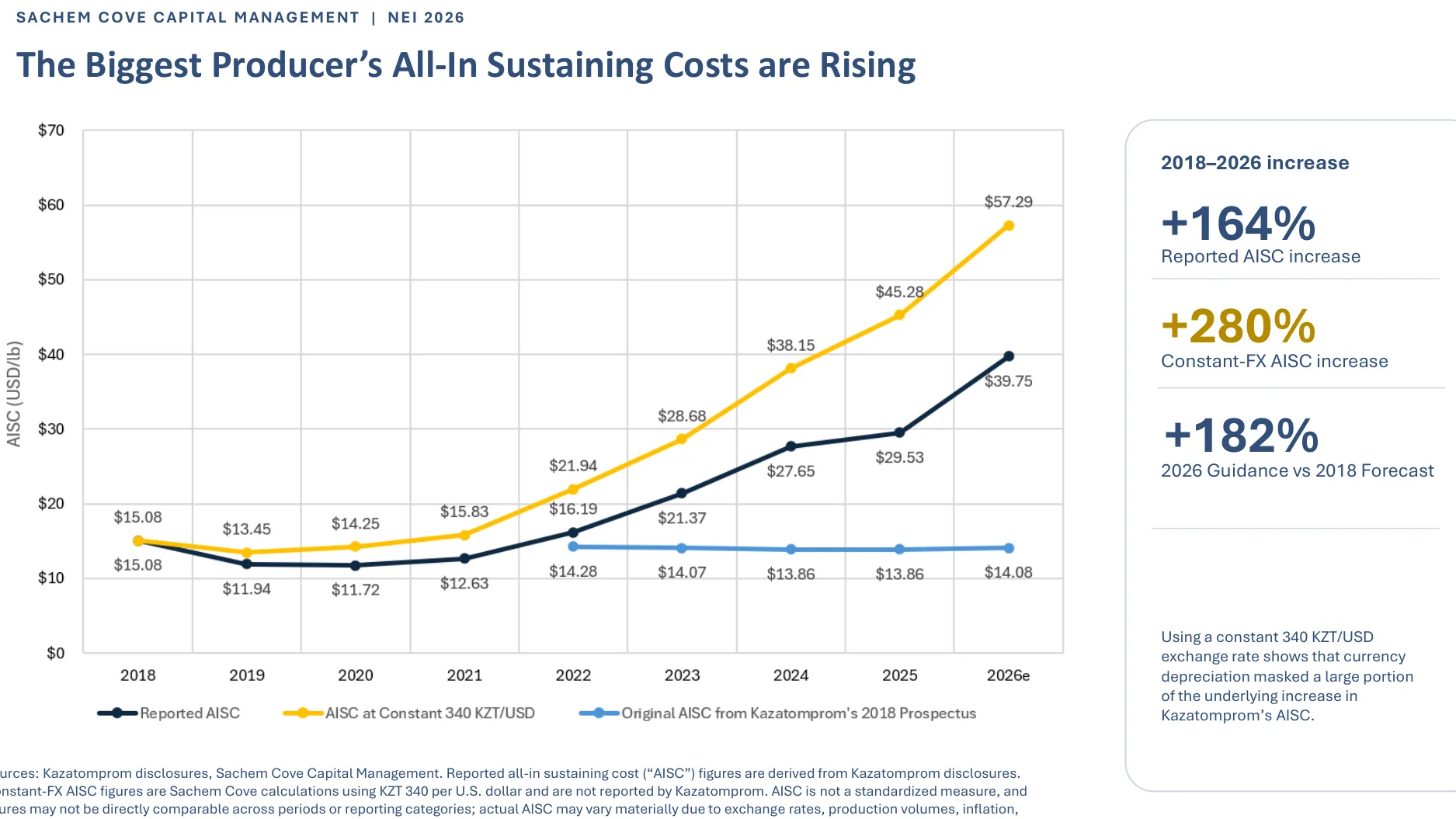
Figure 6. Sachem Cove’s analysis of Kazatomprom’s all-in sustaining costs shows a substantial increase between
2018 and 2026. The presentation reports a 164% rise on a reported basis and a 280% rise when adjusted to a
constant KZT/USD exchange rate. Constant-currency figures are Sachem Cove calculations, not company-reported
measures. Source: slide 13


Kazatomprom’s costs and the wider industry
Alkin uses Kazatomprom—the world’s largest uranium producer and a low-cost operator—as a key test of the industry’s cost assumptions. According to the presentation, Kazatomprom’s 2018 prospectus projected 2026 AISC of US$14.08 per pound. The presentation compares that forecast with a reported 2026 figure of about US$39.75 per pound and a constant-currency calculation of US$57.29 per pound.
Sachem Cove calculates that reported AISC increased by 164% between 2018 and 2026, while the constant-currency comparison shows an increase of 280%. The currency adjustment matters because Kazatomprom incurs many costs in Kazakhstani tenge while selling uranium in U.S. dollars. A weaker tenge can mask underlying cost inflation when costs are converted into dollars.
The presentation also compares production shortfalls and cost increases across a range of operations and projects, including Peninsula’s Lance, Ur-Energy’s Lost Creek, enCore’s Alta Mesa, Boss’s Honeymoon, Paladin’s Langer Heinrich, Cameco’s McArthur River and Kazatomprom. The projects differ in stage, currency, reporting period and cost definitions, so the comparisons are not perfectly like-for-like. Nevertheless, the collection is intended to show a broad pattern: some operations have produced less than earlier targets while costs have risen materially.
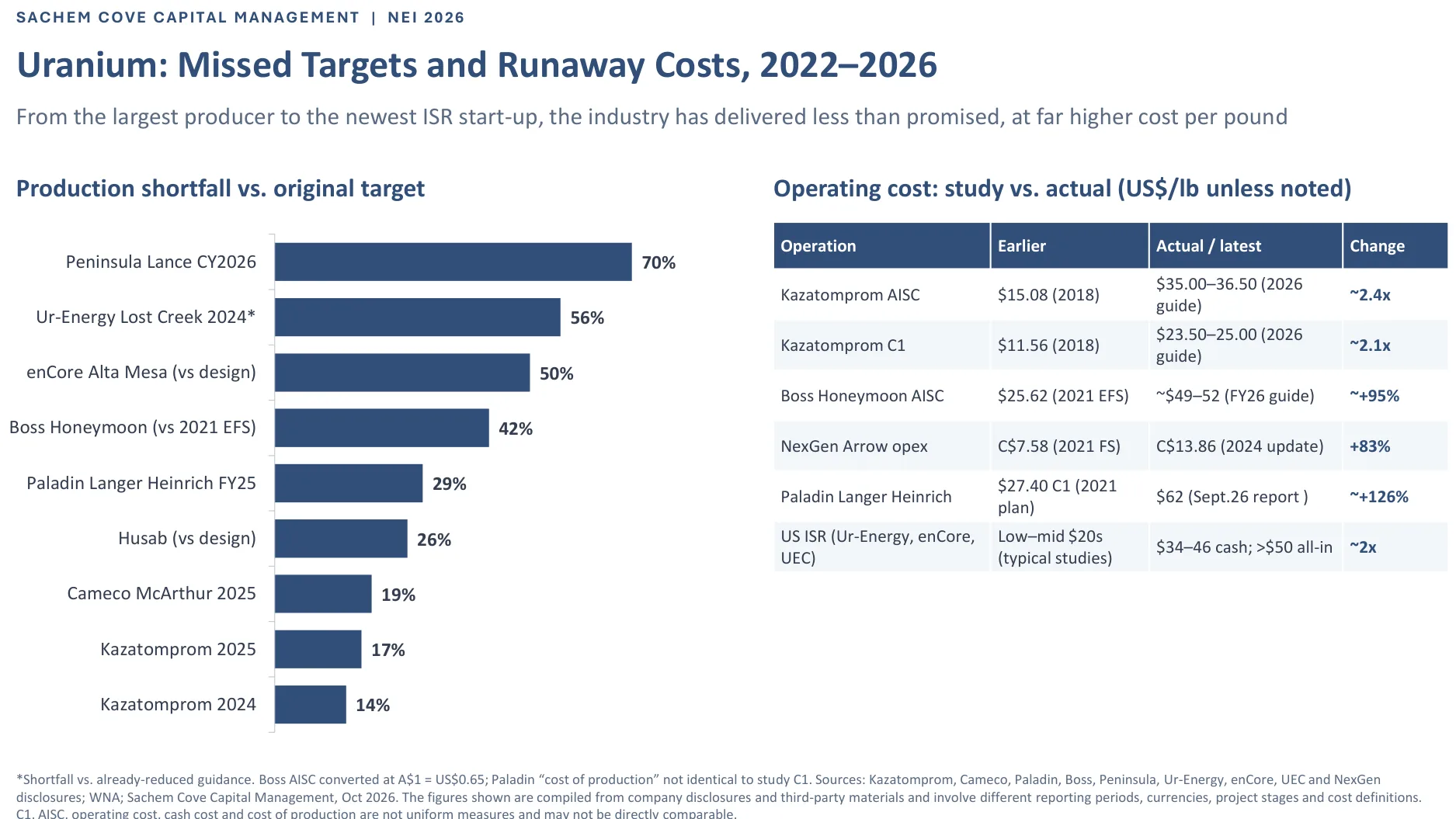
Figure 7. Selected uranium operations and projects: production shortfalls against earlier targets alongside increases
in operating-cost estimates. The presentation notes that project stages, currencies, periods and cost definitions
differ, so the figures should not be treated as uniform measures. Source: slide 15.


Why announced projects may not close the gap
The interview’s next question is whether the industry can deliver enough new uranium over the next five years. Alkin is cautious about taking project schedules and technical-report assumptions at face value. Mines are complex, capital-intensive developments; permitting, approvals, infrastructure, financing, construction and ramp-up can all push first production further into the future.
He notes that some projects once expected to begin production in 2023 have been pushed out to 2028 or even 2031. He does not attribute every delay to poor management, emphasizing that the development process itself can be lengthy. His concern is that supply models often aggregate announced projects as though their stated volumes will arrive on schedule.
Alkin also questions whether smaller, remote or technically challenging projects can achieve the low costs shown in their most optimistic scenarios. If the largest and most experienced producer is facing much higher costs than forecast, he argues, assumptions that a small project in a difficult location can deliver substantially cheaper pounds deserve scrutiny.
Even when a new mine is built, its production may not automatically flow to utilities at the price or on the timetable they expect. Developers may need to raise capital, secure financing or demonstrate commercial viability; utilities may use small contracts with emerging producers to preserve optionality without relying on those pounds as a central part of their fuel plan. Alkin’s broader point is that a project pipeline is not the same thing as dependable, economically viable supply.
Sachem Cove’s presentation summarizes the challenge with a list of assumptions that would all need to work in favour of a lower-price outcome: existing mines would need to deliver as expected, costs would need to moderate, new projects would need to arrive on time, and secondary supply would need to remain available. Alkin believes the market has not adequately accounted for the risk that several of these assumptions fail together.
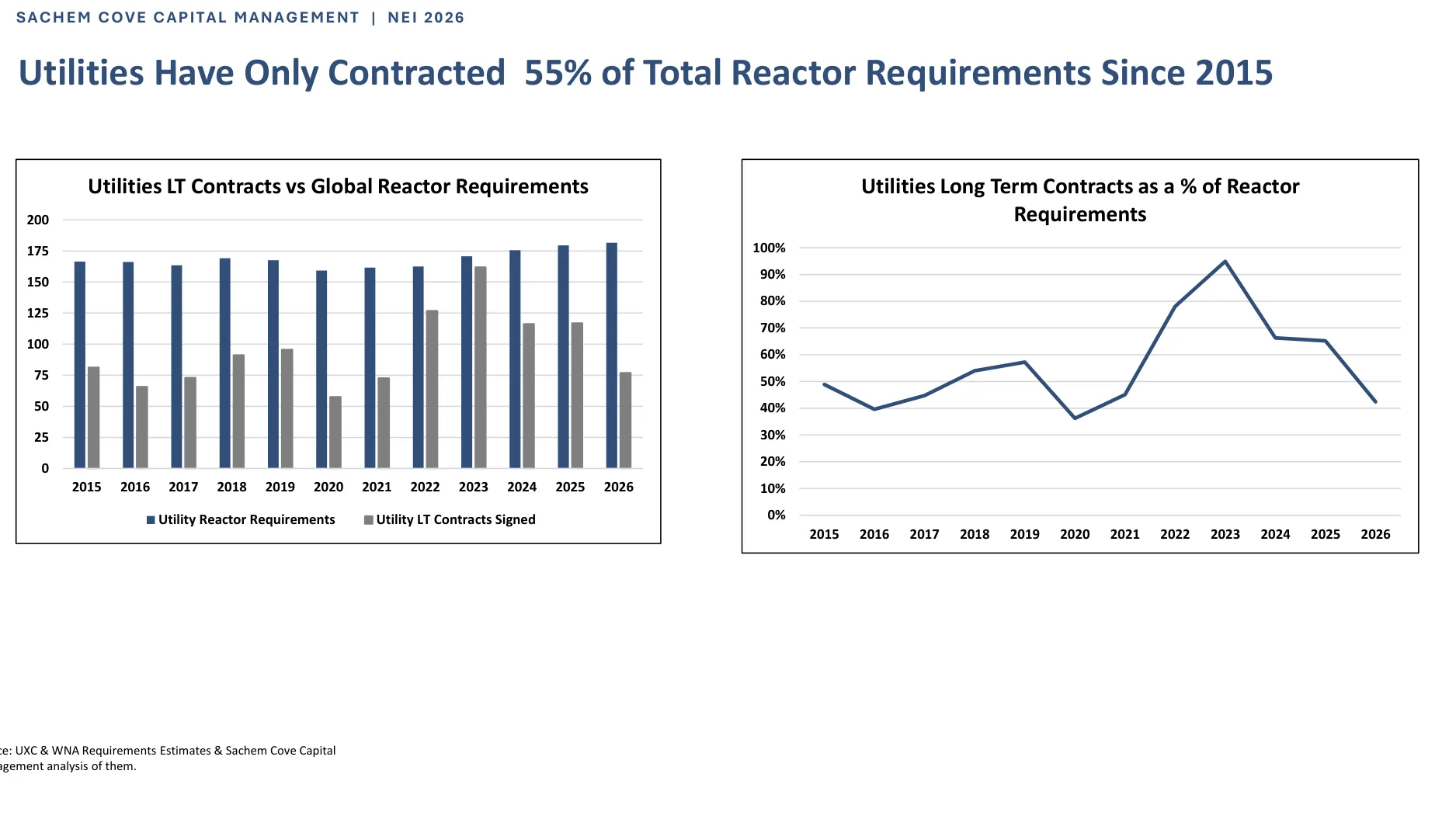
Figure 8. Sachem Cove frames the risk as a timing and deliverability problem: the danger is discovering too late that
expected supply cannot arrive when required. Source: slide 27


A deficit that does not depend on the AI narrative
Alkin estimates that structural deficits could range from roughly 15 million to 35 million pounds per year, depending on the assumptions and the year examined. He says Sachem Cove’s core model focuses on the existing reactor fleet, reactors under construction and the net effect of closures, rather than relying on additional demand narratives around artificial intelligence, data centres or small modular reactors.
That distinction is central to his argument. Nuclear power’s renewed appeal and potential new-build programs may add demand, but Alkin believes the existing fleet and already-under-construction reactors are sufficient to make the supply challenge meaningful. In other words, the bullish case does not need to depend on every AI-related forecast coming true.
The presentation also highlights that utilities have contracted for only about 55% of total reactor requirements since 2015, according to its analysis. Alkin argues that utilities spent years contracting at roughly half the rate at which they consumed uranium, drawing down inventories in the process. That strategy helped defer contracting pressure, but it also left the market needing to refill coverage as future requirements approach.
He is critical of the idea that a low percentage of uncovered requirements in any one year proves that the market is comfortable. In his view, the more important factor has been the limited economic supply response: contract coverage statistics did not reveal how much production would be viable at the prices then available.
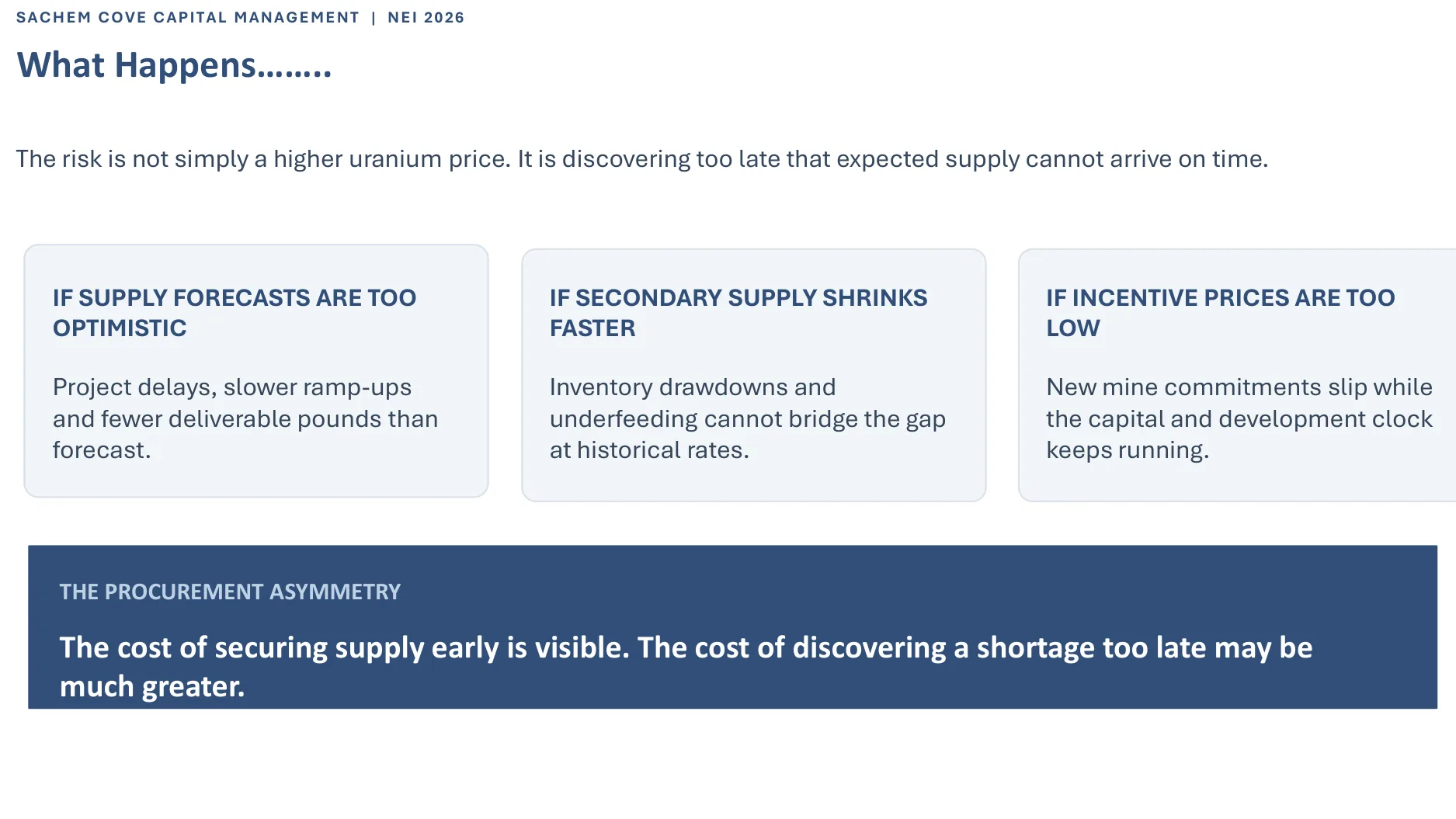

Figure 9. The presentation estimates that utilities contracted for approximately 55% of total reactor requirements
from 2015 onward, leaving a substantial portion of consumption to be met through other sources and inventory
drawdowns. Source: slide 25.


Strategic buying could tighten an already constrained market
The discussion also touched on several developments that were not included in Sachem Cove’s core supply-demand calculations: Kazakhstan’s consideration of a strategic uranium reserve, the U.S. government’s uranium procurement needs tied to national security, and Project UPRISE. Alkin said these initiatives could represent additional claims on available supply rather than sources that automatically expand production.
Kazakhstan’s reserve idea is particularly notable because the country is also the world’s largest uranium supplier. Alkin discussed the possibility that Kazakhstan may wish to retain uranium for its own future nuclear ambitions, including reactors expected to come online in the 2030s. If a major supplier chooses to reserve some material domestically, that could affect the pool of uranium available to international buyers.
On the U.S. side, Alkin said national-security procurement would require several million pounds annually, with the material needing to meet specific sourcing and eligibility requirements. The important point is not simply the headline volume, but whether those pounds must come from the same pool of current production that utilities already need.
He described these developments as potentially positive for price formation, while warning that investors should not assume every policy announcement translates directly into an immediate, fixed quantity of new demand.
Implementation, funding, eligibility rules and timing all matter. “Secondary supply is a decision, not a deposit.” the wider point: secondary supply and strategic inventories are not passive, unlimited reservoirs. They depend on the choices of governments, traders, utilities and enrichers—and those choices can change when economics or national priorities change.


Contracting, price reporting and the thin spot market
Alkin argues that reported uranium contract prices can understate the price at which transactions actually clear. As
he described it, some reporting conventions emphasize the lowest price offered rather than the price paid in a particular deal. If a contract is completed above that lowest offer, the reported benchmark may not fully reflect the transaction’s economics.
He also cautions against treating the spot market as a complete measure of uranium demand. In the interview, he characterized spot as a relatively small, thin and sometimes illiquid segment of the market, with physical traders representing a significant portion of activity. That can make spot prices vulnerable to short-term flows and positioning.
At the same time, Alkin said spot-market firmness during the months leading up to the interview appeared to reflect genuine bids from a broader set of participants, including utilities topping up requirements. He described spot prices as having risen roughly 10%–13% during the year and the term market by somewhat more; these were his estimates during the conversation, not independently updated figures.
For utilities, the long-term market remains crucial because most reactor fuel needs are met through contracts rather than continual spot purchases. As coverage needs to be rebuilt and credible supply becomes more valuable, contracting behaviour may matter more than daily movements in spot prices.
Alkin’s practical message to fuel buyers was blunt: repeatedly using small, low-volume contracts to hold down reported prices is unlikely to solve a structural shortage. If the pounds are needed, utilities ultimately have to secure reliable supply.

Why uranium equities can fall while the fundamentals remain tight
The final part of the conversation addressed a disconnect that many uranium investors have experienced: equities can decline even as the supply-demand thesis appears to strengthen. Alkin identified several forces that can pressure share prices without immediately changing the underlying uranium balance. First, market narratives can dominate flows. Uranium stocks have increasingly been grouped into broader AI, data-centre, power and new-build themes. When investors become concerned about spending plans, project announcements or the pace of new reactor commitments, uranium names can be sold as part of a theme—even if the uranium required by operating reactors remains unchanged.
Second, higher interest rates weigh on capital-intensive mining companies. Many developers and explorers do not generate operating cash flow and need external capital to advance projects. A higher cost of capital can depress valuations and make investors less willing to fund long-duration assets.
Third, uranium stocks can be caught in broader risk-off selling, geopolitical uncertainty, and the short-term positioning of multi-strategy funds. Alkin noted that some investors focus on quarterly catalysts and set expectations for announcements or new-build commitments. If those milestones do not arrive on the expected schedule, capital can leave the sector.
He rejected the notion that Russia is simply poised to flood the market with uranium if geopolitical conditions change, arguing that Russia also has domestic and international reactor commitments and remains a significant participant in enrichment. More broadly, he warned that a compelling long-term thesis does not prevent volatility, nor does it eliminate the need to reassess assumptions.
“We’re not here because we’re uranium enthusiasts. We’re here because there’s an asymmetry.”
Alkin said his team continually tests its thesis by starting from the possibility that it is wrong. His position, as expressed in the interview, was that the central supply-demand facts had not changed enough to invalidate the thesis—but investors must decide for themselves whether they have the conviction and risk tolerance to remain invested through deep drawdowns.

What investors should watch next
Actual mine production versus company guidance, especially at large established operations and new ISR projects.
Updates to operating, sustaining and full-cycle costs—not just headline cash costs.
Permitting, financing, construction and ramp-up milestones for major development projects.
The pace of utility contracting relative to reactor consumption and the amount of forward coverage being rebuilt.
Commercial inventory drawdowns and whether holders are willing to release material at prevailing prices.
Changes in enrichment economics that could reduce underfeeding or increase uranium feed requirements.
The practical implementation and timing of strategic procurement or reserve policies in Kazakhstan and the United
States.
The difference between reported contract benchmarks and the prices implied by actual transactions.
The bottom line
Alkin’s thesis is not simply that nuclear demand is growing. It is that the uranium market’s apparent resilience over the past decade relied on a combination of mine production, inventory liquidation and underfeeding that may not be repeatable. At the same time, operating costs have risen, projects have missed production targets or slipped in schedule, and the industry’s cost disclosures do not always capture the full economic burden of sustaining and replacing supply.
If the inventory bridge narrows while underfeeding fades, the market may become more sensitive to the cost and reliability of primary production. That does not guarantee a straight-line rise in uranium prices, and the interview’s forecasts remain Sachem Cove’s interpretation of an uncertain market. But it does put the spotlight on a crucial question: not how many pounds appear in a spreadsheet, but how many pounds can be delivered, on time, at a price that makes economic sense.
For investors, the key is to separate short-term equity-market narratives from the underlying fuel market while continuing to test the assumptions. As Alkin emphasized, conviction should come from the evidence—not from enthusiasm for the commodity.

Expanded Interview Analysis: The Additional Issues Shaping Uranium’s Next Cycle

This expanded section develops further themes from the full interview transcript that deserve separate treatment
alongside the presentation’s charts.
The uranium demand model is more complicated than reactor counts
Alkin cautions against estimating uranium demand by simply multiplying the number of reactors by a standard number of pounds per reactor. Reactor requirements are influenced by the enrichment services available to utilities.
Changes in enrichment capacity and enrichment economics can shift the amount of natural uranium required, potentially by a material amount. He indicated that this technical relationship can alter feed requirements by as much as roughly 20% in either direction, depending on circumstances.
That point matters because supply-demand models are only as reliable as their assumptions. A model can look precise while embedding assumptions about enrichment capacity, reactor fuel requirements and secondary supply that may change. Alkin deliberately kept the interview focused on the broader market rather than the technical details of enrichment, but he flagged it as an area worthy of a dedicated discussion.
His argument is not that reactor-count models are useless. Rather, they need to be connected to the fuel cycle and to the economic decisions made by enrichers. On the supply side, the same discipline is required: primary mine production should be distinguished from inventory drawdowns and underfeeding, instead of treating every source as equally durable.

The uranium industry is bifurcated—and that changes the price response
Alkin describes uranium production as divided broadly between state-owned producers and Western pure-play uranium companies. By-product production, such as uranium associated with a larger mining operation, is another category, but he considers it less representative of the core economics of the uranium-only producers.
This distinction influences how producers respond to price. A state-owned producer may have strategic objectives, state backing or a different tolerance for returns than a Western company whose business depends on uranium revenue. A pure-play producer must cover not only the direct cost of mining and processing but also corporate overhead, sustaining capital, reclamation obligations, exploration and the cost of financing. It needs a meaningful return to attract capital for long-lived assets.
For that reason, a single industry cost curve can conceal important differences between producers. A pound that is technically producible at a stated operating cost is not necessarily a pound that a company can sustainably produce, finance and deliver at the market price. Alkin’s concern is that the market’s historic models often blurred those distinctions.

The historical lesson: uranium prices can rise before consensus recognizes the shortage
Alkin uses the 2000s uranium cycle as a warning against relying too heavily on consensus balance forecasts.
Uranium prices spent years rising from single-digit levels into the tens of dollars per pound, while market commentary often remained sceptical and did not fully characterize the move as a bull market. Later, operational disruptions—including flooding at Cigar Lake in 2006—helped trigger a rapid repricing.
He recalls uranium prices moving from roughly US$50 per pound to US$137 over about seven months after the Cigar Lake disruption. Yet, in his account, the subsequent forward balance did not simply show a dramatically tighter market. Forecast assumptions changed, including demand estimates and expectations for other mines,
leaving a reported surplus that did not prevent the price spike. The broader lesson is that commodity markets do not wait for spreadsheets to confirm a shortage. When confidence in future supply changes, buyers may compete for deliverable material well before the consensus forecast catches up. This is particularly relevant in uranium because mine development is slow, supply disruptions can be consequential, and the market relies heavily on long-term contracting. 
Alkin also places the post-Fukushima collapse in context. Following the 2011 nuclear accident in Japan, uranium prices fell sharply, eventually reaching the high teens per pound. That collapse contributed to the period in which producers, developers and investors withdrew from the sector. The subsequent supply response was not immediate because mine closures, underinvestment and project delays can take years to reverse.

Inventory is a question of ownership, not just volume
A published estimate of above-ground uranium does not establish that those pounds will be sold into the market. The owner’s identity, contractual obligations, fuel strategy, view of future prices and alternative uses all matter.
Utility inventories are particularly difficult to interpret from headline figures alone. Uranium held by a utility may be embedded in complex fuel-cycle accounting and procurement arrangements rather than sitting in a readily marketable pool. Some inventories may be earmarked for future reactor requirements; other material may be held by traders or financial vehicles with different time horizons.
Alkin argues that this is why the rise in prices from the high teens to around US$90 per pound during the interview period is important context. If inventories were as freely available as some market interpretations implied, he suggests the market would not have needed such a large price adjustment to encourage material to move. The price response indicates that the willingness to sell matters as much as the nominal amount held above ground.
The end of the Megatons to Megawatts program is central to his historical comparison. The program supplied the U.S. market with uranium derived from downblended Russian highly enriched uranium, described by Alkin as roughly 20 million pounds of uranium-equivalent material annually through 2013. That assured stream reduced the need for U.S. utilities to maintain the same inventory cushion or contract for the same volume of replacement supply. Today’s market cannot assume that this historical source will recur on the same basis.

Contract coverage can look comfortable even when procurement is behind consumption
Alkin challenges the use of short-term uncovered-requirement percentages as evidence that utilities have no urgent contracting problem. He describes a pattern in which the market entered successive years with a relatively small portion of near-term requirements labelled uncovered—figures he cited in the interview ranged around 6% to 11% for different years—while utilities were contracting at only about half the rate of consumption.
These statistics measure different things. A small uncovered percentage over a particular three-year window does not mean the industry has replaced the uranium already consumed or secured enough future supply. It can reflect earlier inventories, contracts signed in prior periods and the timing of reactor requirements. If consumption persistently exceeds new contracting, the difference must be met somewhere else.
The central concern is the cumulative effect. Alkin argues that utilities used inventories to bridge a gap between consumption and contracting. That may have appeared efficient when uranium was cheap and secondary material was available, but the strategy becomes more vulnerable when inventories are less mobile, underfeeding is lower and the cost of new production is higher.
He also questions how reported long-term contract prices represent market clearing. As he explains it, some reporting conventions can reflect the lowest offer available rather than the price at which a particular contract was ultimately signed. A reported benchmark may therefore understate the price paid in a transaction. The transcript gives examples of deals potentially being completed above the lowest available offer; those examples are Alkin’s description of market practice, not a universal rule for every reported contract.

Why the supply pipeline should be probability-weighted
A project pipeline is not the same as a forecast of deliverable pounds. Alkin urges investors and analysts to review technical reports critically, check the assumptions against actual operating history and avoid assuming that every announced project will be financed, built, commissioned and ramped up on schedule.
The interview notes examples of projects whose anticipated start dates moved from 2023 to 2028 or even 2031. Alkin is careful to say that delays can reflect the time required for permits, approvals and development rather than necessarily proving management failure. But for a fuel buyer, the distinction does not change the practical outcome: pounds that arrive years late cannot meet requirements in the intervening years.
He also warns against taking low project-cost estimates at face value, particularly for small, remote projects with difficult infrastructure or jurisdictional circumstances. A low-cost case may describe an optimistic technical scenario rather than the economics of a fully financed, operating business. Cost estimates should be tested against capital intensity, scale, infrastructure, ramp-up risk, corporate costs and the number of pounds that must be produced before the project generates acceptable returns.
The interview also raises a strategic issue: even if a project succeeds, its output is not automatically destined for a utility. Producers may have alternative commercial options, including selling to traders or strategic buyers, or structuring their assets in ways that give them flexibility over timing. Larger companies may choose to develop projects themselves or acquire smaller assets. The supply model must therefore consider not only whether pounds can be produced, but whether they will be available to the buyer that needs them, when they need them, and on
acceptable terms.

Cost reporting: cash cost, sustaining cost and full-cycle economics
Alkin lays out several layers of mining cost. Cash cost is the direct expense of producing a pound at the operation, typically including mining, processing, milling and site-level general and administrative expenses. That figure can be useful for understanding short-run operating economics, but it does not show the full cost of maintaining a business over time.
An all-in sustaining cost should account for sustaining capital, sustaining exploration, corporate overhead and reclamation-related spending. Alkin notes that unlike gold, where the World Gold Council developed a more standardized AISC framework, uranium does not have one universally applied definition that guarantees every company’s figure is comparable. As a result, two issuers can use the same label while including different costs.
Sachem Cove then considers a broader all-in cost, including non-sustaining capital, non-sustaining exploration, new-project permitting, future-site reclamation and other expenses needed to maintain or replace production. Alkin also points to financing costs and interest, taxes and working-capital changes as real economic burdens, even if they are not included in a particular operating-cost measure.
The implications are significant for the incentive price. A mine can produce at a cash cost below the market price and still struggle to finance expansion or replace depleted reserves. A new project may require a much higher long-term contract price to cover construction, financing and risk. A credible cost curve should therefore distinguish between operating existing assets, sustaining them, and incentivizing new production.

Why utilities may be more concerned about access than the headline price
In discussing utility contracting, Alkin focuses on incentives. Fuel buyers are highly technically capable, but he argues that many are not necessarily incentivized like commercial traders or investors. Paying a higher uranium price may not jeopardize a buyer’s career in the same way that failing to secure fuel could, because uranium is a relatively small component of a nuclear plant’s overall operating costs and there is no practical substitute for the required fuel.
The bigger risk, in his view, is competition for reliable pounds. A utility can decide to delay contracting in the hope of obtaining a better price, but that approach becomes more dangerous if other utilities, governments, sovereign funds or financial vehicles compete for the same supply. A low price is not useful if the required pounds cannot be secured when needed.
Alkin described a shift in how fuel buyers engage with him compared with 2018 and 2019. At that time, he says, some buyers dismissed his view that prices needed to rise. In the current cycle, he senses greater concern about competing sources of supply, even if buyers are not eager to discuss the issue publicly. These are his observations from industry interactions and should be read as anecdotal rather than a formal survey of utilities.
Strategic demand: Kazakhstan, U.S. national security and Project UPRISE
The conversation covers three potential sources of additional pressure that were not included in Sachem Cove’s base-case numbers: a possible strategic uranium reserve in Kazakhstan, U.S. procurement for national-security purposes, and Project UPRISE. Alkin explicitly says these developments were not incorporated into his supply-demand model, so they should be treated as possible additional claims on supply rather than as quantified demand in the core forecast.
Kazakhstan’s discussion of a strategic reserve is notable because the country is the world’s largest uranium supplier. Alkin says President Kassym-Jomart Tokayev discussed the country’s own reactor ambitions for the 2030s and the idea of holding a 50- to 100-year uranium reserve. The country’s sovereign wealth fund, which owns the majority of Kazatomprom, was reportedly asked to consider how such a reserve might be established. The potential market effect depends on policy details and implementation; the interview does not establish a final reserve size or
procurement timetable.
Alkin also notes that Kazakh uranium has increasingly been directed toward buyers in Asia, including China and India, and discusses a proposed project involving Russian participation that had faced a shareholder vote. His broader point is that Western utilities should not assume Kazakh pounds will always be available on the same terms, at the same time, or in the quantities that historical models imply.
For U.S. national-security procurement, Alkin refers to a need for several million pounds annually, with material required to be unobligated and sourced in the United States. He says only a limited number of companies may have the capacity to provide it. If pounds from current production are directed to a government buyer, those same pounds are not simultaneously available to utilities. The impact depends on eligibility, funding, timing and the actual procurement volume.
Project UPRISE was mentioned as another development outside the model. The interview does not provide enough detail to assign a reliable quantity of additional demand to it, so this article does not attach a numerical estimate. The relevant analytical question is whether it creates a new, incremental requirement for material that would otherwise have been available to existing buyers.
The role of Sprott and the changing composition of spot-market demand
Alkin describes the spot market as a relatively small part of the uranium market, roughly 20%–25% in the range he discussed, with much of that segment involving physical traders. Traders may buy and resell material for relatively small margins, manage offtake agreements or take directional positions, but their activity does not necessarily reveal the long-term procurement intentions of utilities.
He also discusses Cameco’s role as a major spot-market buyer in some years. As he explains it, Cameco has historically sold more uranium under contract than it produces directly, meaning it may need to purchase material in the spot market to fulfil contractual commitments. This can make a producer’s spot activity look different from that of a utility buying fuel for its own future requirements.
Sprott Physical Uranium Trust is another important participant in the market’s recent history. Alkin estimates that the vehicle acquired roughly 80–85 million pounds over time, but says it had been much less active during the period discussed because it traded at a discount and was not raising as much capital through its at-the-market program. In earlier periods, traders may have been more willing to sell pounds when Sprott was absent. In the period covered by the interview, he observed that the absence of Sprott had not produced the same selling pressure, while other
financial participants and some utilities were bidding for material.
This distinction matters because the daily spot price is visible and frequently quoted, but it reflects a small and sometimes illiquid part of the market. A strong spot price can be meaningful when it is supported by a wider range of buyers; a weak spot price can also be misleading if it reflects temporary trader flows rather than a change in long-term fuel demand.
The price signal: reported term prices, contract collars and utility access
During the interview, the discussion referenced spot uranium around US$91–92 per pound and a reported long-term price around US$97 per pound. These were contemporaneous figures cited in the conversation on October 29–30, 2026, not current live quotations. Alkin argued that reported term prices were moving higher and that some contracts included floors in the US$70s and ceilings in the US$150–160 range for a major producer, depending on the agreement.
He stressed, however, that a ceiling price does not guarantee that a utility can secure the volume it wants. The buyer still needs a producer willing and able to sell. Near-term producer capacity may be limited, while producers with longer-dated optionality may be willing to wait for more attractive economics. For utilities, contract duration, volume, delivery profile, floors, ceilings and counterparty credibility all matter.
Alkin was especially critical of the practice of signing very small contracts with developers primarily to establish a low reference price. He described examples of utilities taking small volumes from early-stage producers even where the buyer might doubt that the mine would be ready by the delivery date. Such transactions may preserve
optionality or influence the reported benchmark, but they do not necessarily provide dependable large-scale supply.
The interview’s point is not that every small contract is meaningless or every developer will fail. It is that procurement decisions must distinguish between a price reference and a credible delivery commitment. When a structural shortage becomes more acute, the value of dependable pounds may outweigh the apparent advantage of a low benchmark.
Equities, narratives and the difference between a commodity thesis and a stock trade
Alkin’s explanation for uranium equities’ weakness despite a constructive fuel-market outlook centres on capital flows and changing market narratives. In previous pullbacks, uranium was often primarily a supply story, and investors were uncertain whether prices would remain high enough to support new production. In the current cycle, the underlying supply story is accompanied by a broader demand narrative involving AI, data centres, power demand, new nuclear builds and small modular reactors.
That broader theme can attract capital, but it can also create vulnerability. Investment banks and funds may assemble baskets of stocks intended to provide exposure to power, AI infrastructure or nuclear construction. Uranium equities can then move with the performance of the broader theme rather than with uranium-specific fundamentals. If investors become concerned that hyperscalers are spending too aggressively, that data-centre
projects may be delayed or cancelled, or that new reactor announcements are not arriving on schedule, uranium names can be sold alongside other thematic holdings.
Alkin also points to higher interest rates. Uranium developers and explorers often require substantial external capital and may not yet generate operating cash flow. Higher borrowing costs and more demanding equity markets can weigh on long-duration, capital-intensive projects. A general risk-off environment, geopolitical uncertainty and the positioning of multi-strategy funds can intensify selling in thinly traded stocks.
He pushes back on the idea that Russia would automatically flood the uranium market if geopolitical tensions eased. His argument is that Russia has its own reactor fleet, international reactor commitments and a major enrichment business that itself requires uranium feed. That does not eliminate geopolitical risk, but it makes the simple narrative of an immediate flood of Russian uranium too simplistic.
The interview also highlights the role of investor expectations around new-build announcements. If investors set monthly or quarterly targets for reactor packages, financing announcements or government programmes, a delay can prompt selling even if the fuel requirements of the existing reactor fleet have not changed. In Alkin’s view, sentiment and market structure can therefore explain equity volatility without necessarily disproving the uranium supply-demand thesis.
A thesis must remain testable
Alkin repeatedly emphasizes that investors should not confuse conviction with blind bullishness. He says Sachem Cove tests its thesis by starting from the assumption that it could be wrong and looking for evidence that would invalidate it. He acknowledges that uranium equities can experience severe drawdowns and that holding through them requires a clear understanding of the underlying facts and personal tolerance for risk.
His framework is to monitor the actual supply-demand balance, production performance, costs, inventories, contracting, enrichment economics and the timing of new projects. If those facts change materially, the thesis should change too. If the facts remain intact while equities fall because of a broader narrative or temporary capital-flow pressure, the drawdown may represent a different kind of risk—but it is not automatically a buying
opportunity for every company.
The distinction between a commodity thesis and an individual equity is crucial. Even in a tight uranium market, companies can differ widely in balance-sheet strength, project quality, jurisdiction, permitting status, financing needs, management execution and ability to deliver pounds. A rising uranium price does not remove those company-specific risks.
Consolidated investor checklist
Separate primary mine production from inventory drawdowns and enrichment underfeeding in every supply-demand
model.
Test demand assumptions against enrichment capacity and fuel-cycle economics, not only reactor counts.
Compare cash cost, AISC and full-cycle cost definitions before ranking producers or projects.
Track actual production against guidance and technical-report forecasts, and probability-weight future projects for
delays.
Examine who owns above-ground inventories and whether those holders have a reason to sell.
Measure utility contracting against consumption over several years, not just near-term uncovered requirements.
Distinguish reported contract benchmarks from the price and terms of actual transactions.
Watch the composition of spot-market demand, including utilities, producers, traders and financial vehicles.
Monitor strategic reserve and government procurement plans without assuming unconfirmed volumes are already
committed.
Separate uranium-specific fundamentals from AI, data-centre, new-build and broader risk-on/risk-off equity flows.
Continue to test the thesis against disconfirming evidence and assess each company on its own economic

Join our Newsletter!

Sign up to our free monthly newsletter to recieve the latest on our interviews and articles.

By subscribing you agree to receive our newest articles and interviews and agree with our Privacy Policy.
You may unsubscribe at any time.