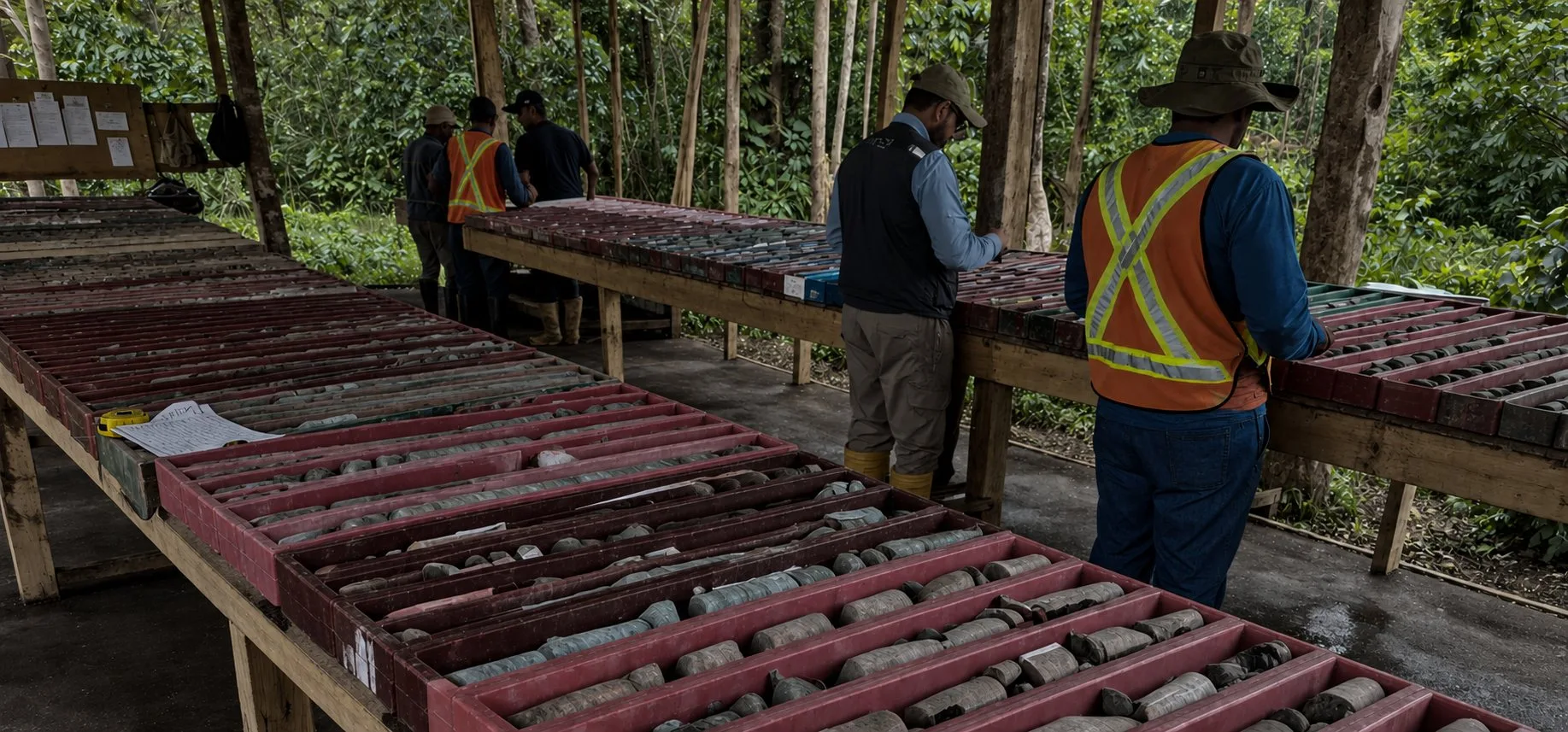
With a historical uranium resource estimate of 20.6 million pounds, more than 129,000 metres of drilling and a portfolio of additional mineralised targets, U92 Energy Corp. is focused on unlocking the potential of its flagship Kurupung Uranium Project in Guyana. Executive Chairman Adam Clode outlines the company's exploration strategy, geological advantages, development ambitions and the experienced team working to advance the project.
U92 Energy Corp. (TSXV: UTWO) is focused on advancing its flagship Kurupung Uranium Project in Guyana, where extensive historical exploration has established a substantial foundation for further resource growth.
In recent talk, Executive Chairman Adam Clode outlined the company's strategy: build on the existing historical resource, expand the known mineralisation, establish the scale required to support a potential mining operation and progressively advance the project toward development.
The Kurupung Project covers approximately 92.3 square kilometres across two prospecting licences. The property has a historical mineral resource estimate of 20.6 million pounds of uranium oxide (U₃O₈), supported by more than 129,000 metres of historical drilling.
According to Clode, the extensive exploration database provides the company with a strong starting point. The geological model is well understood, and previous drilling has identified multiple mineralised areas, creating opportunities to expand the known resource and investigate additional targets across the property.
U92's immediate strategy is to advance exploration systematically, beginning with targeted drilling intended to add mineralised material to the geological model. The longer-term objective is to establish sufficient scale and demonstrate the technical and economic potential required to support a potential 10-year mine life.
The company ultimately intends to pursue resource expansion and project development in parallel, with the longer-term ambition of advancing toward a bankable feasibility study while continuing to explore the wider property.
The Kurupung Project benefits from a long history of exploration dating back to the late 1970s and early 1980s, when the property was first discovered by Cogema, now part of Orano.
Subsequent exploration was undertaken by U3O8 Corp. between 2008 and 2012. During that period, approximately 88,000 metres of drilling were completed, contributing to the historical resource estimate of 20.6 million pounds of U₃O₈.
Across the property's exploration history, more than 129,000 metres of drilling have been completed. This extensive body of work has helped establish the geological framework and identify several areas of known mineralisation, as well as additional targets that warrant further investigation.
The historical resource is distributed across four principal areas: Aricheng North, Aricheng South, Aricheng West and Aricheng C.
Importantly, the property is not limited to these established resource areas. Previous drilling has also tested other mineralised targets across the licence package, providing a broader inventory of opportunities for future exploration.
For U92, the objective is to use this existing geological knowledge to guide capital allocation, prioritise the most prospective areas and progressively expand the resource base.
The project's historical resource estimate totals 20.6 million pounds of U₃O₈. As outlined in the company's project information, this comprises approximately 10.59 million pounds in the Indicated category and 10.05 million pounds in the Inferred category.
The historical estimate provides an important foundation for the company's exploration strategy. However, it should not be interpreted as a current mineral resource estimate under the current reporting requirements of National Instrument 43-101.
U92's objective is to undertake additional drilling and technical work to support an updated mineral resource estimate prepared in accordance with applicable reporting standards.
This distinction is central to the company's development pathway: historical work establishes a starting point, while new exploration and technical studies are intended to determine the current resource and its potential economic significance.
One of the key advantages highlighted by Clode is the team's understanding of the geological controls on mineralisation at Kurupung.
The uranium mineralisation is hosted in granite and is associated with corridors of low magnetic response. According to Clode, the relationship between the mineralisation, magnetic characteristics and soil geochemistry has helped the team develop a clearer understanding of where uranium is likely to occur.
Airborne geophysical data, soil geochemistry and historical drilling can be integrated to refine exploration targeting and identify extensions to known mineralised zones.
This understanding is particularly important when allocating exploration capital. Rather than approaching the property as an entirely unexplored area, U92 can use the existing geological model to target specific zones where additional drilling may expand the known mineralisation or improve confidence in the resource.
Clode also highlighted the relatively shallow nature of the historical drilling. The average drill-hole depth across the property is approximately 130 metres, while only one hole had exceeded 200 metres at the time of the interview.
This leaves scope to investigate both extensions of known mineralisation at depth and additional near-surface zones. The company is particularly interested in areas where drilling may demonstrate continuity, increased mineralised widths or improved grades.
The long-term objective is not simply to increase the number of pounds in the ground. U92 intends to grow the resource while assessing the grade, geometry, continuity and other technical characteristics that would influence the potential development of an economically viable mining operation.
Clode identified the results of the previous exploration campaign as one of the project's key strengths.
Of the 88,000 metres drilled during the last major historical campaign, approximately 97% reportedly intersected mineralisation.
This result reflects the extent of the previous work and the understanding developed around the property's geological model. It also provides a basis for prioritising follow-up drilling within established mineralised corridors.
The reported success rate should be understood in the context of the company's historical drilling experience. Intersecting mineralisation does not, by itself, establish economic viability or guarantee that future drilling will achieve comparable results. Nevertheless, the historical results provide an important technical foundation for designing the next phases of exploration.
U92 also reported a historical discovery cost of approximately US$0.32 per pound of uranium, with Clode attributing a 61% reduction in discovery cost to the improved understanding of the geological model.
For an exploration company, the ability to use existing data to target mineralisation more efficiently can be an important consideration when deploying capital. U92's approach is to build on the historical database and focus new drilling on areas where it believes the potential to add value is strongest.
At the time of the interview, U92 was preparing its initial 5,000-metre drilling programme, subject to final environmental permitting.
The programme was designed around two principal objectives: investigate extensions to known mineralisation at Aricheng South and advance the Quarry North target toward potential inclusion in an updated geological model.
Aricheng South is a priority area because the final hole drilled during the previous campaign reportedly encountered an expansion in mineralisation accompanied by a slight increase in grade.
U92 intends to follow up on this result to determine whether the mineralised zone continues to widen and whether the observed grade trend persists.
The programme also includes drilling along the western flank of the known mineralisation, where additional near-surface holes could help identify extensions to the existing mineralised area.
The proposed drilling was expected to include holes reaching approximately 200 to 220 metres in depth, allowing the company to test the deposit below much of the existing drilling.
The results will help the team assess the continuity and geometry of the mineralisation and determine how much additional material may be incorporated into a future resource estimate.
The second priority is Quarry North, where approximately 26 historical drill holes had already been completed.
According to Clode, additional infill drilling could improve the geological understanding of this area and potentially support its inclusion in a future mineral resource estimate.
The planned work was expected to combine relatively shallow holes, approximately 30 to 40 metres deep, with selected deeper holes to test the mineralisation and establish the information required for geological modelling.
By focusing on an area with existing drilling, U92 aims to determine whether further work can efficiently advance the target toward resource definition.
Clode indicated that the initial 5,000-metre programme could potentially support a 20% to 30% increase relative to the existing historical resource, although he explicitly declined to provide a definitive tonnage or poundage forecast.
Any actual increase would depend on drilling results, geological interpretation and the requirements for establishing a reportable mineral resource.
The first phase is therefore intended to deliver more than additional drill intersections. It is designed to refine the geological model, test the most immediate resource-growth opportunities and provide the technical basis for planning subsequent exploration.
Beyond the initial programme, U92 intends to advance a wider portfolio of mineralised targets across the Kurupung property.
Clode identified ten additional target areas, with more than 15,000 metres of historical drilling reported across them. These areas represent potential opportunities to expand the resource beyond the four principal deposits.
The company's proposed strategy is to evaluate these targets systematically, prioritising those that offer the strongest combination of geological potential, existing drilling information and the ability to contribute to resource growth.
Phase Two drilling is intended to move the project toward what management describes as critical mass: a resource scale that could support the evaluation of a potential 10-year mine life.
Clode cited uranium operations in Namibia producing approximately 3.5 million to five million pounds annually as a reference point when discussing the scale that U92 hopes to establish. This comparison represents a development objective, not a production forecast for Kurupung.
The company will need to demonstrate that the project's mineralisation, grade, geometry, processing characteristics and potential operating costs can support an economically viable operation before any production decision can be made.
Following the planned Phase Two drilling, U92 intends to pursue an updated mineral resource estimate. If the resulting resource and technical data support further advancement, the company expects to proceed toward preliminary economic studies while continuing exploration through a subsequent drilling phase.
The overarching strategy is to avoid treating resource growth and development planning as separate, sequential objectives. Instead, U92 wants to build the resource base while progressively evaluating the pathway toward a potential mine.
Metallurgical performance will be another important component of the project's advancement.
Historical bench-scale testing reportedly achieved uranium recoveries of approximately 84%. Clode described this as a useful baseline for evaluating the project's processing potential.
Historical work also investigated ore sorting technology. According to Clode, those trials showed promising results, and the company believes subsequent advances in the technology may justify further investigation.
Modern ore sorting can, where suitable for the mineralogy and physical characteristics of an orebody, help distinguish material with different mineral content before processing. Whether it can improve recoveries, reduce processing requirements or lower costs at Kurupung will depend on further test work.
Clode expressed optimism that additional metallurgical work could potentially improve on the historical recovery results, but emphasised that further testing would be needed to establish actual performance.
The company therefore intends to incorporate metallurgical testing into its broader technical programme. The results will be important in evaluating processing options and understanding the potential economics of a future development scenario.
U92 is also seeking to extract additional value from its extensive historical exploration database.
At the time of the interview, the company had engaged Fleet Space to undertake core scanning and digitisation work. The planned programme involved scanning historical drill core, capturing photographs, recording rock quality designation (RQD) data relating to rock-mass fracturing and making the resulting information available for further analysis.
Digitising the historical core could make it easier for the technical team to review information from earlier campaigns and integrate observations with existing geological and geophysical data.
Clode also noted the potential to apply artificial intelligence tools to the digitised dataset to identify patterns or generate additional exploration targets.
The application of these tools is an opportunity for further analysis rather than a guarantee of new discoveries. Their value will depend on the quality of the underlying data, the geological context and validation by the company's technical team.
Combined with the historical drilling database, this work is intended to support more informed target selection and help U92 make effective use of the exploration information already available.
Guyana has gained international recognition for its offshore oil and gas discoveries, but its mining history extends much further back, encompassing bauxite, diamonds and gold.
Clode described the country as a jurisdiction with substantial experience in natural resource development and government agencies familiar with the regulatory requirements of exploration and mining.
He pointed to the investment associated with ExxonMobil's offshore developments and the growth of the country's gold sector as evidence of Guyana's importance as a destination for natural resource investment.
For U92, Guyana's established mining sector offers access to a jurisdiction where exploration, permitting and development are familiar activities for the relevant authorities and industry participants.
The company's prospecting licences cover approximately 92.3 square kilometres, providing a substantial land package for systematic exploration.
Guyana's experience with natural resource projects does not remove the risks associated with uranium exploration or guarantee that permits will be granted within a particular timeframe. Nevertheless, U92 considers the country's mining experience and regulatory framework important components of its investment case.
At the time of the interview, the company was awaiting final environmental permitting before beginning the planned Phase One drilling programme.
Clode described the company's engagement with the Guyana Geology and Mines Commission (GGMC) and the Environmental Protection Agency (EPA) as constructive. He also explained that the permitting process is intended to balance exploration and development with environmental protection and the interests of local communities.
Under the approach described in the interview, exploration activities require appropriate authorisations and reporting, including compliance with approved work programmes and environmental obligations.
The company also referred to an environmental bond equivalent to 10% of its annual work programme, subject to the applicable regulatory requirements.
As the project advances from exploration toward potential development, the regulatory process would become more extensive. A future mining operation would require additional technical studies, an appropriate mining licence and detailed consideration of mine planning, environmental management and other development requirements.
U92's stated objective is to advance the project in accordance with applicable regulations and recognised industry practices. The environmental and permitting requirements will remain important milestones as the company progresses.
Clode explained that funds raised by the company were intended to support the initial drilling programme and contribute to the start of Phase Two, alongside the practical infrastructure required to operate in Guyana.
The planned uses of funds discussed in the interview included access-road preparation, drill-pad access, equipment, camp facilities, core storage, technical work and working capital.
The company had purchased earth-moving equipment to help manage access preparation. Clode noted that equipment hire costs in Guyana could be high, making the purchase of certain equipment a practical consideration for the programme.
U92 had also established a camp and core storage facility, with further work planned to improve road access and support exploration operations.
These investments are intended to provide the infrastructure needed to conduct drilling and manage the growing volume of geological information generated by the project.
Capital allocation will remain important as the company moves through successive exploration phases. The ability to prioritise targets, use historical information effectively and manage operational requirements will influence how efficiently U92 can advance the project.
Clode reported that the company's most recent financing at the time of the interview had been oversubscribed, with investor interest continuing after the book was already oversubscribed.
He also described interest from institutional investors and participants in Europe, Asia and Australia.
According to Clode, investors were attracted by the combination of an established historical resource, extensive previous drilling, an understood geological model and the potential to expand the resource through additional exploration.
The financing interest was presented as an indication of market engagement with the company's exploration proposition. It should not be interpreted as a guarantee of future financing availability, share-price performance or project economics.
As with other mineral exploration companies, U92's ability to execute its strategy will depend on exploration results, permitting, capital requirements and conditions in the uranium and broader financial markets.
U92's strategy is supported by a team with experience across uranium, mining project development, geology, finance and international resource markets.
Clode emphasised that the company's objective is to advance Kurupung beyond historical exploration and systematically evaluate its potential as a future mining operation.
Clode brings more than 25 years of mining and project-development experience, particularly in emerging markets. His background includes work from early exploration and resource definition through construction, commissioning and operations.
He began his career as a project engineer at a major gold mine in Ghana before moving to Zambia, where he held a site management role on the Lumwana project, subsequently developed under Equinox Minerals.
He later served as Director of Projects at African Minerals, working on the iron ore project in Sierra Leone. His experience included building teams, advancing the project from early exploration through development and helping progress the operation toward first ore shipments.
Clode's background is directly relevant to U92's stated objective of progressing Kurupung through resource growth, technical evaluation and potential mine development.
Ross McElroy has extensive experience in uranium exploration and company development.
He led Fission Uranium Corp. through the discovery and advancement of the Triple R deposit, before Paladin Energy acquired Fission Uranium in a transaction valued at approximately C$1.14 billion in 2024.
His uranium-sector experience provides U92 with additional technical and strategic perspective as it evaluates the next stages of Kurupung's development.
Ambassador Otto J. Reich brings experience in diplomacy, international affairs and Latin American relations.
His career included serving as US Ambassador to Venezuela and as Assistant Secretary of State for Western Hemisphere Affairs. His regional knowledge and international relationships provide additional experience relevant to a company operating in Latin America.
Jonathan Wiesblatt has experience in uranium analysis, investment management and the mining sector.
His background includes uranium research and portfolio management, as well as executive and board positions in resource companies. This experience adds capital-markets and investment-sector knowledge to the board.
Dr. Richard Spencer has extensive experience in uranium exploration and resource development. He served as President and CEO of U3O8 Corp. for 17 years and oversaw the historical exploration programme at the Kurupung property, including the drilling that contributed to the historical resource estimate.
He also led the teams responsible for significant mineral discoveries in Ecuador, including the Loma Larga gold-silver-copper deposit and several copper porphyry projects.
His historical knowledge of Kurupung provides important continuity as U92 reviews the existing geological model and plans further exploration. Dr. Spencer serves as an independent Qualified Person, providing technical oversight in accordance with applicable reporting requirements.
Together, the team's experience spans geological interpretation, resource definition, project development, uranium markets and international resource investment.
The interview also addressed the wider uranium market and the conditions shaping the outlook for the sector.
Clode pointed to growing electricity demand, the expansion of artificial intelligence and data centres, ageing power infrastructure and renewed interest in nuclear energy as important drivers of the industry's long-term outlook.
Major technology companies have increasingly sought reliable, long-term sources of electricity, including through agreements linked to nuclear power. Governments have also shown renewed interest in nuclear generation as part of their energy security and decarbonisation strategies.
Clode cited agreements involving Google, Microsoft, Meta and Amazon as examples of growing interest in nuclear-powered electricity. He also highlighted China's continuing reactor construction programme and US policy support for new nuclear capacity.
Nuclear power requires uranium fuel, and the sector faces the challenge of ensuring that future production and conversion capacity can keep pace with reactor requirements.
For uranium developers and explorers, these trends provide a potentially supportive long-term backdrop. However, the timing and extent to which stronger demand translates into higher uranium prices or improved valuations for junior exploration companies remain uncertain.
Despite the favourable long-term narrative, Clode acknowledged that junior uranium companies had not consistently benefited from the broader sector outlook.
He attributed much of the weakness to wider financial-market conditions, including geopolitical uncertainty, economic data, corporate earnings and investor reluctance to allocate capital to smaller exploration companies.
This disconnect between long-term fundamentals and short-term market performance is an important feature of the exploration sector. Companies may have promising projects and favourable commodity-market exposure while still facing share-price volatility and financing constraints.
For U92, the response is to focus on advancing the underlying project: delivering drilling results, improving the geological model, expanding the resource and establishing a clearer pathway toward potential development.
The company's long-term opportunity ultimately depends on technical execution and the ability to demonstrate the quality and economic potential of Kurupung, rather than on uranium-market sentiment alone.
At the time of the interview, the company's near-term priorities centred on securing the remaining environmental approval, commencing Phase One drilling and progressing toward a second phase of exploration.
Clode indicated that, once the required permit was received, the company intended to move quickly with the planned 5,000-metre programme. Samples would be sent to laboratories for analysis, while metallurgical testing and the design of subsequent drilling would progress alongside the exploration work.
He described historical assay turnaround times of approximately four to five weeks. Based on the workflow discussed, the company expected the first assay results to follow the initial drilling campaign after laboratory preparation and analysis.
The results of Phase One would inform the design of Phase Two, including decisions about which targets should receive priority and how best to build the resource base.
The company's longer-term milestones, as outlined in the interview, included:
Clode discussed a potential resource update during 2027 and a possible feasibility-study timeframe in 2028. These were management's objectives at the time of the interview, rather than guaranteed completion dates. Actual timing will depend on exploration results, permitting, technical work, financing and other project requirements.
U92 Energy's development strategy is built around the combination of a substantial historical uranium resource, extensive previous drilling, an established geological model and additional mineralised targets across a large licence package.
The company's immediate focus is on testing extensions to known mineralisation and improving the geological understanding of priority areas. Beyond the initial drilling, management intends to evaluate further targets and work toward an updated resource estimate capable of supporting more advanced technical studies.
The historical drilling record and the reported 97% mineralisation intersection rate provide a foundation for this strategy, while the project's relatively shallow historical drilling leaves opportunities for further investigation both near surface and at depth.
At the same time, U92 recognises that moving from exploration to a producing mine requires more than identifying additional uranium. Resource definition, metallurgy, engineering, environmental approvals, financing and economic studies will all be necessary to establish whether Kurupung can be developed successfully.
For Clode, the objective is clear: use the team's experience and the extensive historical database to grow the resource, demonstrate the project's potential scale and advance toward a possible long-term production opportunity.
As the uranium sector responds to growing electricity demand and renewed interest in nuclear energy, Kurupung represents U92's opportunity to build on its existing exploration foundation and work toward the next stage of project development.
About U92 Energy Corp.
U92 Energy Corp. is a Canadian uranium exploration company listed on the TSX Venture Exchange under the symbol UTWO. Its flagship Kurupung Uranium Project is located in Guyana, South America. The company is focused on systematically advancing the project through exploration, resource growth and technical evaluation.
For more information, visit www.u92corp.com.
Sign up to our free monthly newsletter to recieve the latest on our interviews and articles.
By subscribing you agree to receive our newest articles and interviews and agree with our Privacy Policy.
You may unsubscribe at any time.

We use cookies to improve your experience on our site. By using our site, you consent to cookies.
Websites store cookies to enhance functionality and personalise your experience. You can manage your preferences, but blocking some cookies may impact site performance and services.
Essential cookies enable basic functions and are necessary for the proper function of the website.
These cookies are needed for adding comments on this website.
Statistics cookies collect information anonymously. This information helps us understand how visitors use our website.
Google Analytics is a powerful tool that tracks and analyzes website traffic for informed marketing decisions.
Service URL: policies.google.com (opens in a new window)
Marketing cookies are used to follow visitors to websites. The intention is to show ads that are relevant and engaging to the individual user.
You can find more information in our Privacy Policy.