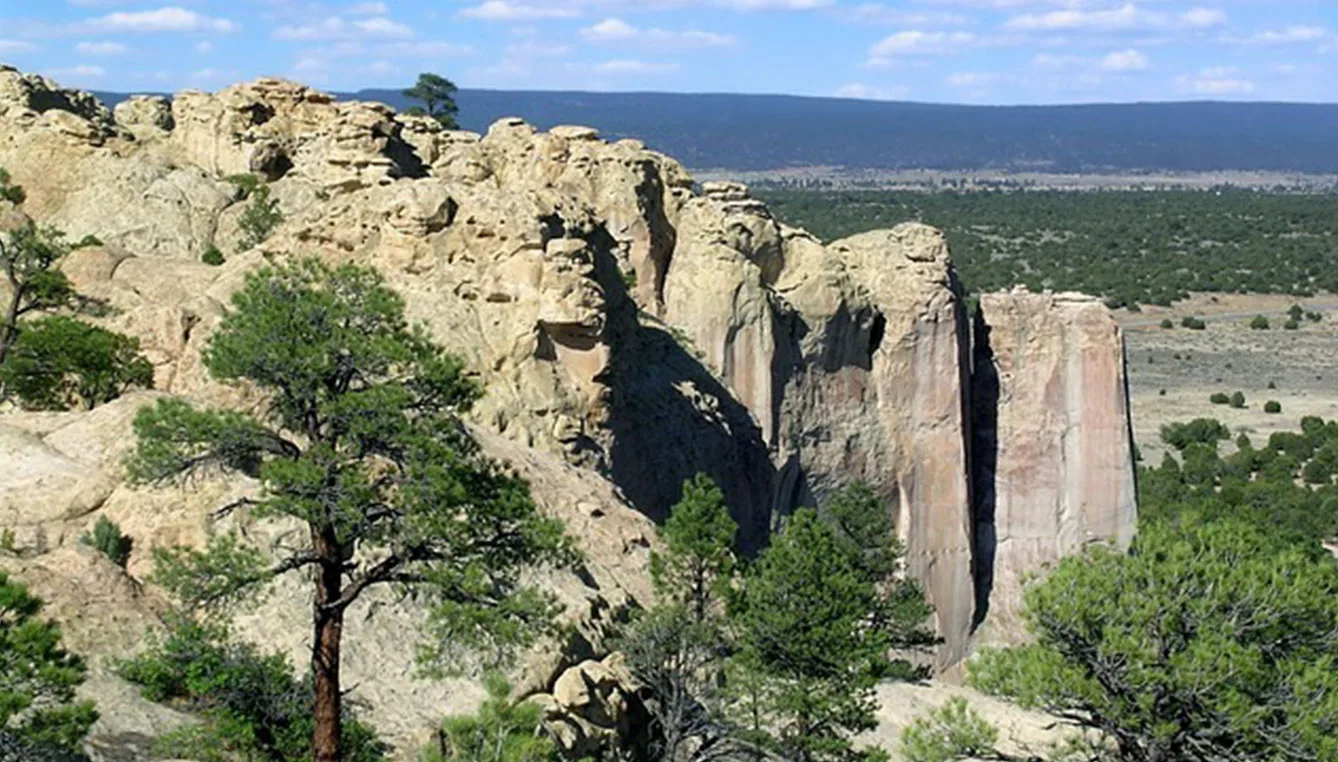
Gamma Resources is positioning itself at the intersection of a growing need for domestic uranium supply, historically mineralized ground, and renewed interest in developing the U.S. nuclear fuel cycle. With projects in New Mexico and Utah, the company is pursuing an exploration strategy that combines historical geological information with modern exploration techniques.
We spoke with Gamma Resources President Connor Messler about the uranium market, the company's two projects, permitting, exploration plans, financing, and the potential catalysts ahead. The discussion offered insight into how a junior uranium explorer is approaching opportunities in two historically productive regions of the United States.
The following article is based on the interview transcript. Historical mineralization and resource estimates discussed by the company are not presented as current compliant mineral resources, and the interview is not a recommendation to buy or sell securities.
COMPANY PROFILE • URANIUM EXPLORATION • UNITED STATES
Gamma Resources: Exploring America's Uranium Potential Through Two Historic Districts
An in-depth look at the company's Mesa Arc and Green River projects, the U.S. uranium supply gap, and the exploration catalysts that could shape its next stage of development.
The U.S. uranium supply gap creates a compelling exploration backdrop
The United States remains heavily dependent on imported uranium to supply its nuclear power industry. For Gamma Resources President Connor Messler, this structural dependence is one of the key reasons the company is focused on domestic uranium exploration.
Speaking about the U.S. market, Messler emphasized that the challenge extends beyond mining to the broader nuclear fuel cycle, including refining and enrichment. However, he identified domestic production as a particularly important area of concern.
“There's a clear, really structural deficit here in the United States when it comes to uranium production, as well as refinement, enrichment, but in particular production.”
According to Messler, the company was founded around the thesis that domestic uranium supply would become increasingly important. The combination of international supply constraints, national security considerations, and U.S. policy supporting critical materials production has reinforced that strategy.
The company views uranium not simply as an energy commodity, but as a material with strategic importance. Nuclear power requires a dependable supply of fuel, and disruptions in international markets can have implications well beyond commodity pricing.
Messler noted that U.S. efforts to bring critical materials production back onto domestic soil have continued across political administrations. In his view, the long-term importance of uranium supply security should remain relevant regardless of future political changes.
Uranium prices, term contracting, and the need for new production
The interview took place in early September, when the host referenced a spot uranium price of approximately $89.50–$89.70 per pound and a long-term uranium price of approximately $97 per pound. These figures were part of the interview's market discussion and are not independently verified in this article.
Messler acknowledged that spot prices had started the year at higher levels before experiencing a decline during the first half. Nevertheless, he argued that the market continued to provide a constructive backdrop for exploration.
One of the important indicators he highlighted was the relationship between spot and long-term uranium prices. A higher term price can indicate that buyers are willing to secure future supply at prices above the immediate spot market, potentially supporting the economics of future production.
“The signal you mentioned already that the spot price, term price is higher than spot, which is always a strong indicator for the market.”
Messler also pointed to the expected reduction in access to certain Russian-linked uranium supplies by 2028 as a potential factor influencing future market conditions. He expects demand from nuclear power and other energy-intensive industries to remain an important influence on uranium prices.
For exploration companies, however, a strong uranium price alone is not enough. Projects must demonstrate geological potential, secure the necessary permits, attract capital, and ultimately establish whether mineralization can support an economically viable operation.
Gamma's strategy is therefore focused on identifying and advancing assets that already have a geological foundation, while using modern exploration to determine whether that potential can be translated into compliant resources.
Why Connor Messler joined Gamma Resources
Messler joined Gamma Resources as president only a few months before the interview. His professional background is primarily in base and precious metals, but his work evaluating uranium assets alongside Gamma CEO Gabriel Alonso-Mendoza helped shift his attention toward the nuclear fuel sector.
The two executives had known each other for nearly a decade through their connection to Amvest Capital. Messler had previously assisted in evaluating uranium projects globally, which gave him an opportunity to become familiar with the commodity and its underlying investment case.
He explained that uranium offered an attractive combination of commodity fundamentals, domestic policy support, and long-term demand growth.
“The commodity felt right. And then looking at the projects, yeah, Utah, our Green River project ... But then Mesa Arc as well.”
The reference to new technologies is particularly relevant to the broader energy discussion. Messler identified the expansion of artificial intelligence data centers and other high-energy-consuming industries as developments that could influence future electricity demand.
While the interview did not quantify the impact of these industries on uranium consumption, it presented them as part of the wider backdrop behind Gamma's interest in nuclear fuel.
For Messler, the decision to join the company ultimately came down to three factors: the uranium commodity, the policy environment, and the potential of the company's two projects.
Mesa Arc: Gamma's New Mexico flagship project
Among Gamma Resources' two assets, Mesa Arc in New Mexico currently holds the position of the company's flagship project, according to Messler. The principal reason is the extensive historical exploration and the presence of historically documented uranium mineralization.
The project is located within the Colorado Plateau, a region with a long history of uranium exploration and production. Historical work conducted in the area between the late 1960s and early 1980s generated approximately 1,000 drill holes and 75,000 metres of drilling, according to the interview.
For a junior explorer, such a volume of historical information can provide an important starting point. Instead of approaching the property as a completely unexplored greenfields opportunity, Gamma can investigate existing geological records, identify areas of interest, and assess whether earlier discoveries can be advanced using modern methods.
However, the distinction between historical data and a modern mineral resource is essential. The historical mineralization and estimates discussed in the interview are non-compliant with current reporting standards. Gamma's objective is to determine whether those historical results can support a modern resource estimate after further verification and exploration.
Historical drilling provides a foundation for modern exploration
Messler explained that historical drill spacing in some resource areas was as close as approximately 50 feet. The company also has access to historic drill logs and gamma logs, which provide information about the geological and radiometric characteristics of the drilled intervals.
These records may help Gamma understand the distribution of mineralization without immediately undertaking a large-scale drilling campaign across the entire project.
The company's initial strategy involves digitizing the historic logs and incorporating the information into a three-dimensional geological model. This would allow the exploration team to examine the historical mineralized zones more closely and determine where additional drilling could provide the greatest value.
“We're actively scanning the historic drill logs ... those will be digitized. We'll get those into a 3D model and that'll allow for further scrutiny on those deposits around those historically documented mineralized areas.”
The company is also examining whether historic downhole radiometric data could help move certain historical estimates toward an inferred resource category. Messler stressed that any such classification would ultimately be determined by a qualified person and would require the appropriate technical work.
The goal is not simply to reproduce historical estimates, but to establish whether the available information can be validated and upgraded into a modern, compliant geological resource.
Understanding the geology: Paleo channels and faulting
Mesa Arc's geological setting is central to the exploration strategy. According to Messler, the uranium mineralization is hosted in paleo channels—ancient river channels that formed in the geological past.
These channels have subsequently been disrupted by faulting. As a result, Gamma is not necessarily looking for one large, continuous, tabular body of mineralization.
Instead, the geological model suggests that mineralized bodies may have some continuity in particular directions, potentially down dip, while remaining separate from other mineralized zones.
“We're not looking at a large tabular body of mineralization ... the mineralized bodies that have previously been identified have at least some lateral extent to them, but are likely not interconnected with one another.”
This geological interpretation has important implications for exploration. A drill hole can miss a mineralized paleo channel even when it is relatively close to a mineralized occurrence. Understanding the orientation and distribution of these channels is therefore critical to designing effective follow-up drilling.
The company hopes that digitized historical data, geological modelling, and additional surveys will help identify the most prospective areas for future exploration.
Permitting Mesa Arc: A key milestone before drilling
Although the company initially considered drilling Mesa Arc during 2026, Messler explained that Gamma had subsequently pulled back from that optimistic timeline. The company planned to re-evaluate its draft plan of operations, with digitization of historical logs and a planned surface radon survey playing important roles in the process.
The survey is intended to help refine the exploration target areas and potentially eliminate less prospective drill targets before the company commits to a larger drilling program.
Gamma is working within the permitting framework applicable to New Mexico and the relevant federal land-management authorities. Messler indicated that the company expected to submit a revised draft plan of operations to the Forest Service during the year. The timing of drilling would then depend on the review process and the level of environmental impact associated with the proposed program.
The company was optimistic about potentially getting equipment onto the ground during the first half of 2027, although Messler emphasized that this was dependent on permitting and agency decisions.
“Ultimately that'll be at the discretion of the Forest Service, in terms of the permitting, as well as New Mexico State.”
The company is also seeking to keep the anticipated area of disturbance below five acres, according to the interview. The significance of that threshold is that the scope of the proposed exploration program and its environmental impact would influence the applicable permitting process.
The interview did not establish a guaranteed approval date or a confirmed drilling start date. Investors should therefore view the potential 2027 drilling timeline as an objective subject to regulatory review rather than a fixed commitment.
Responsible exploration in New Mexico
New Mexico has a significant historical association with uranium mining. That history makes environmental stewardship, safety, and community relations important considerations for any company seeking to conduct modern exploration in the state.
Messler acknowledged the importance of earning the trust of local communities and emphasized that Gamma's current activity at Mesa Arc is an exploration project rather than a mine-development operation.
There is currently insufficient information to design a mine plan, according to his comments. The company's immediate task is to understand the geological potential of the property while following the applicable environmental and occupational safety requirements.
He pointed to advances in environmental regulation, worker safety, water recycling, and modern exploration practices since uranium mining activity in New Mexico declined during the 1980s.
“We're not looking to do the bare minimum here. We want to ensure that the work we perform will leave us in good standing with our neighbors in northern New Mexico.”
Gamma's approach includes community outreach, compliance with prescribed environmental policies, and the use of modern techniques for solids removal and water recycling where applicable.
Messler said the company had already begun community outreach and hoped to increase communication with local residents in the coming months. This will be an important part of the project's development, particularly as the company seeks to move from historical exploration data toward a modern field program.
Permitting on Forest Service land
The permitting process for exploration on federal land can vary depending on the state, the specific forest or land-management area, and the anticipated environmental impact of the work.
Messler described early-stage exploration permitting as a relatively prescribed process, while noting that more advanced projects typically encounter larger permitting thresholds and more extensive agency involvement.
For Mesa Arc, Gamma is working with subject-matter experts familiar with New Mexico's regulatory environment and historical mining activity. The company expects the review of its draft plan of operations to provide greater clarity on the timing and scope of its proposed drilling.
The interview also highlighted that permitting timelines can be difficult to predict, even in jurisdictions considered attractive for mining investment. Gamma's management therefore views the permitting process as a major factor in determining the pace of exploration.
Green River: A second uranium opportunity in Utah
Gamma's second major asset is the Green River project in Utah, located in the San Rafael Mining District. While the property contains less historical data than Mesa Arc, its location and geological setting make it an important part of the company's exploration portfolio.
Messler noted that the project is close to other uranium companies, including Western Uranium & Vanadium and Manhattan Resources, and that the broader district has a history of uranium production.
The proximity of established uranium projects was one factor that attracted Gamma to the property. However, the company also sees geological similarities between the mineralization at Green River and the paleo-channel-hosted systems at Mesa Arc.
“Even though the land package there is about a quarter of what we have in New Mexico, it was still an exciting opportunity.”
The Green River property consists of two claim packages. The northern claim block has seen substantial historical drilling, while the southern claim block contains promising historical intercepts, according to Messler.
Gamma intends to review both the historical drill data and the physical drill holes that remain accessible on the property.
Re-examining historical drill holes
One of the distinctive aspects of the Green River exploration strategy is the potential to use existing historical drill holes for additional data collection.
Messler explained that many of the old holes were left open below small surface caps. The company hopes to access these holes with downhole survey equipment to gather information that was either unavailable or not collected during the original drilling campaigns.
The proposed work includes downhole radiometry to examine radioactive signatures, acoustic techniques to collect structural information, and monitoring of the water table.
“We're going to go in with downhole survey equipment and really test not only the radioactive signatures downhole ... but also start to collect some structural data using basically acoustic techniques.”
This approach could allow Gamma to build a more detailed geological understanding of the property before expanding its drilling program. The information would be particularly relevant to determining the structure, permeability, and hydrogeological conditions of the mineralized zones.
For an early-stage explorer, using historical infrastructure and drill holes to improve geological understanding may help focus capital on the most relevant targets. The interview did not provide an independent estimate of the cost savings or the potential resource size that could result from this work.
In-situ recovery potential
A major point of interest at Green River is the possibility that its geological and hydrogeological characteristics could be suitable for in-situ recovery, or ISR.
In-situ recovery is a method of extracting certain uranium deposits by circulating a solution through permeable mineralized rock underground and recovering the dissolved uranium. The method is dependent on specific geological, hydrological, and environmental conditions.
Messler explained that mineralization at Green River is believed to become deeper toward the east, with the geology gradually dipping in that direction. He also noted that neighboring properties to the west have mineralization below the water table.
Gamma's own work is intended to establish a better understanding of the water table, geological structures, and permeability of its mineralized zones. These are important considerations when assessing whether an ISR approach could be viable.
“The exciting part of that is it opens us to the possibility of in-situ recovery.”
The wording is important: ISR is a potential development concept, not an established mining method for Green River. Additional geological, hydrogeological, metallurgical, environmental, and engineering work would be required before the company could determine whether such a method is appropriate.
Green River drilling: A modest program with multiple objectives
Gamma's planned Green River drilling program is designed to test historical mineralized zones and potentially expand the known mineralization.
Messler indicated that the company was targeting approximately 3,000 feet of drilling. The program would consist of roughly five to six holes, each approximately 500–600 feet deep.
The proposed drilling is relatively modest in scale, but the company believes it can provide valuable information because of the nature of the paleo-channel-hosted mineralization.
“You can be within, you know, fifty feet of those channels and miss.”
This observation highlights the challenges of exploring channel-hosted deposits. A successful program would not only test historically documented mineralized zones but could also help establish step-out targets for further exploration.
Gamma's approach is to first test the historical areas, then use the results to determine whether there is sufficient geological justification for additional drilling.
The company indicated that it hoped to undertake the program later in 2026, subject to permitting and other operational requirements. The interview did not provide a confirmed start date or guaranteed results.
Infrastructure: An advantage for Green River
Infrastructure is another factor that makes Green River attractive to Gamma Resources.
The project is located approximately 30 minutes from the town of Green River, Utah, according to Messler. He noted that the drive could be reduced to approximately 10 minutes if all roads were paved.
Interstate 70 runs between the project's two claim blocks and through the wider San Rafael area. This provides access to a major transportation corridor in a region that has a history of uranium exploration and mining.
“We're fortunate in that as far as the Mountain West goes ... there are worse places to be looking in terms of infrastructure.”
Existing roads, historical exploration tracks, and the proximity of a population center could help reduce some of the logistical challenges associated with exploration in remote parts of the western United States.
Infrastructure does not eliminate the costs or technical challenges of developing a mining project, but it can be an important consideration when evaluating exploration opportunities. Gamma's management believes that the area's accessibility could support a more efficient exploration program as the project advances.
Which project is the flagship?
When asked whether Green River had become Gamma's flagship project, Messler gave a clear answer: Mesa Arc currently holds that position because of its extensive historical resource information.
The New Mexico project has more historical data and a greater volume of previously documented exploration. Green River, by comparison, offers a different type of opportunity: less historical information, but potentially significant upside if the company's upcoming drilling is successful.
Messler described the two projects as being in a kind of competition for attention within the company's portfolio.
“They're sort of jockeying for position. ... They both have their strengths, they both have their weaknesses.”
This distinction is important for understanding Gamma's strategy. Mesa Arc offers a data-rich opportunity to investigate historical mineralization and pursue resource compliance. Green River offers a more direct opportunity to generate new geological information through fieldwork and drilling.
The company is not currently choosing to abandon one project in favor of the other. Instead, management intends to advance both, subject to available capital, permitting, and exploration results.
A U.S.-focused growth strategy
Gamma Resources is currently focused on its New Mexico and Utah projects, but management remains open to additional opportunities.
Messler said the company would consider a partnership or acquisition if the right uranium asset became available. He emphasized that the focus would remain on U.S. projects, including jurisdictions with historical uranium production or documented mineralization.
The company may also consider organic growth through claim staking and expansion rather than relying exclusively on acquisitions.
However, management acknowledged that Gamma's cash position does not currently support aggressive expansion. This makes capital allocation a critical consideration as the company seeks to advance its existing assets.
“Our cash position doesn't allow us to really ... expand in an aggressive manner.”
The immediate priority is to demonstrate the geological potential of the two existing projects. Successful exploration results could strengthen the company's position when evaluating future partnerships, acquisitions, or additional financing opportunities.
Financing and the path toward exploration
Gamma Resources was conducting a private placement at the time of the interview. Messler stated that the first tranche had closed at approximately C$872,000, against an original target of C$880,000.
The company subsequently increased the intended size of the financing to approximately C$1.75 million.
According to management, reaching the upsized financing target would place Gamma in a position to fund its planned exploration work and make a drilling decision for Mesa Arc.
The company expected to have sufficient capital to operate through the following year, excluding the cost of a Mesa Arc drilling program. The timing of a future financing would depend partly on the permitting process and the clarity of the drilling timeline in New Mexico.
“If we're able to hit that upsized target, we'll be in a secure position really to a drill decision for Mesa Arc.”
The financing is intended to support exploration activities, including field programs, geological work, and exploration at Green River. The company also expects to generate additional capital in the future if the Mesa Arc drilling program moves forward.
For investors, the important distinction is that the stated capital position is tied to the company's planned work program. The interview did not provide a detailed budget, cash balance, or independently verified financial statements. The ability to complete future exploration will depend on the final financing outcome, expenditure requirements, and any additional capital raised.
Insider ownership and the shareholder structure
Messler said that Gamma's CEO, Gabriel Alonso-Mendoza, is one of the company's largest shareholders. Total insider ownership among management, advisors, and the board of directors was approximately 15% at the time of the interview.
The company also had several family offices among its shareholders, with no individual outside shareholder exceeding 9.9%, according to Messler.
The private placement was still underway, meaning the share structure was subject to change. Management expected to have better visibility into the capital structure within one to two weeks of the interview.
“The insider ownership is about that, yeah, fifteen percent.”
Insider ownership can be relevant to investors because it may align management's interests with those of shareholders. However, it is not a guarantee of performance, exploration success, or financial returns.
The management team and future expertise
Gamma Resources' management team combines experience in geology, corporate finance, mining, and project evaluation.
Messler described CFO Bob Doyle as having more than 30 years of industry experience, including work with companies listed on the TSX and New York Stock Exchange. CEO Gabriel Alonso-Mendoza brings experience through Amvest Capital and its mining-focused network.
Messler himself has approximately 15 years of industry experience and has worked on projects ranging from discovery through feasibility-stage development.
This combination gives Gamma experience across several areas that are important for an exploration company: identifying mineralized systems, evaluating projects, navigating corporate financing, and developing a path toward more advanced exploration.
However, management recognizes that the expertise required may change as the projects develop.
If Mesa Arc or Green River successfully expands its mineralization, the company may need to add individuals with deeper production and mine-development experience. Messler also identified stakeholder engagement as an area where additional expertise could be valuable, particularly in New Mexico.
“Naturally, if the projects develop into something larger ... pulling someone in who has a bit more production background ... would certainly be a benefit to us.”
This reflects a common transition in the mining sector: the skills needed to identify and explore a deposit are not identical to those required to permit, finance, construct, and operate a mine.
Gamma's current priority is to establish proof of concept through exploration. The company's future team structure would then depend on whether the projects demonstrate sufficient potential to justify more advanced development.
What investors can watch for in the remainder of 2026
The interview concluded with a discussion of the company's expected news flow and exploration catalysts.
Messler acknowledged that much of Gamma's recent news had been corporate-focused. One of the company's major accomplishments before his arrival was the removal of legacy debt from the balance sheet, following the transition from its predecessor, Medallion Resources.
Going forward, management expects exploration activities to become a more prominent part of the company's public updates.
Several potential catalysts were identified during the interview.
Gamma was seeking to complete its upsized financing, which management said would support the planned exploration program and inform the decision on future Mesa Arc drilling.
The company intends to digitize historic drill logs and gamma data, develop a 3D geological model, and use the information to refine its understanding of mineralized zones.
A planned survey could help identify and prioritize drill targets, potentially reducing the amount of unnecessary drilling.
Gamma plans to evaluate historical drill holes and, subject to permitting, undertake approximately 3,000 feet of drilling in Utah. The work could test historic mineralized zones and explore potential step-outs.
The company is considering expansion opportunities at both properties and may evaluate additional U.S. uranium assets if suitable partnerships or acquisitions arise.
Messler expressed optimism that the latter half of 2026 would bring a more exploration-focused news flow. He also indicated that the company hoped to publish exploration-related news before the end of September.
The timing of these events remains dependent on financing, fieldwork, permitting, and results. The interview did not establish a confirmed date for all of the proposed activities.
Conclusion: A junior explorer with two different paths to growth
Gamma Resources is pursuing a U.S.-focused uranium exploration strategy built around two projects with different strengths.
Mesa Arc in New Mexico is the company's current flagship because of its extensive historical drilling and previously documented mineralization. The key challenge is converting historical information into a modern, compliant geological resource through data verification, modelling, permitting, and eventually drilling.
Green River in Utah offers a different opportunity. It has less historical data, but its location within the San Rafael Mining District, proximity to established uranium operations, accessible infrastructure, and potential ISR-related geological characteristics provide a basis for further exploration.
The company's near-term strategy is to advance both assets while managing capital carefully. Its success will depend on whether historical mineralization can be validated, whether new drilling identifies meaningful mineralization, and whether the projects can ultimately support the technical and economic work required for development.
For investors following the U.S. uranium exploration sector, Gamma Resources represents an exploration-stage story rather than a producing uranium company. The principal potential catalysts are exploration results, progress toward compliant resources, permitting milestones, and the company's ability to finance its work program.
The interview's central message was that Gamma sees an opportunity to explore uranium in a market where domestic supply security is increasingly important. Whether that opportunity develops into a significant mineral discovery or a commercially viable project remains to be established through exploration.
“I think we're more hopeful that the next six months, the latter half of this year will be exploration heavy when it comes to news.”
— Connor Messler, President, Gamma Resources
Interview disclaimer
This article is based on a transcript of an interview conducted by Triangle Investor Interviews. It is intended for informational purposes only and does not constitute investment advice or a recommendation to buy or sell securities. Historical mineralization and resource estimates discussed in the interview are not necessarily compliant with current reporting standards. Exploration targets, potential ISR applications, and future drilling plans remain subject to technical verification, financing, permitting, and exploration results. Investors should conduct their own due diligence and consult a qualified financial advisor.
Sign up to our free monthly newsletter to recieve the latest on our interviews and articles.
By subscribing you agree to receive our newest articles and interviews and agree with our Privacy Policy.
You may unsubscribe at any time.
We use cookies to improve your experience on our site. By using our site, you consent to cookies.
Websites store cookies to enhance functionality and personalise your experience. You can manage your preferences, but blocking some cookies may impact site performance and services.
Essential cookies enable basic functions and are necessary for the proper function of the website.
These cookies are needed for adding comments on this website.
Statistics cookies collect information anonymously. This information helps us understand how visitors use our website.
Google Analytics is a powerful tool that tracks and analyzes website traffic for informed marketing decisions.
Service URL: policies.google.com (opens in a new window)
You can find more information in our Privacy Policy.