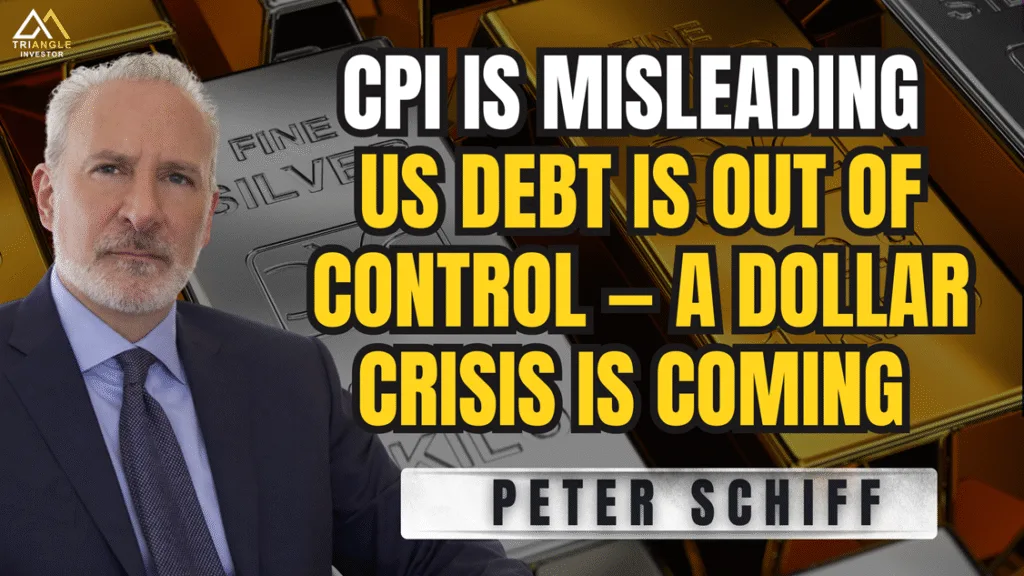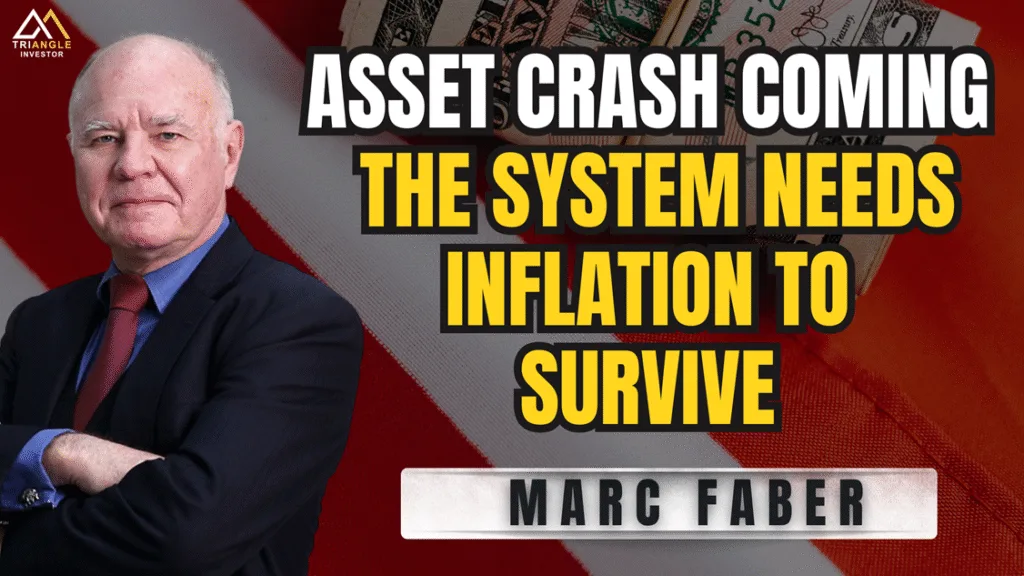
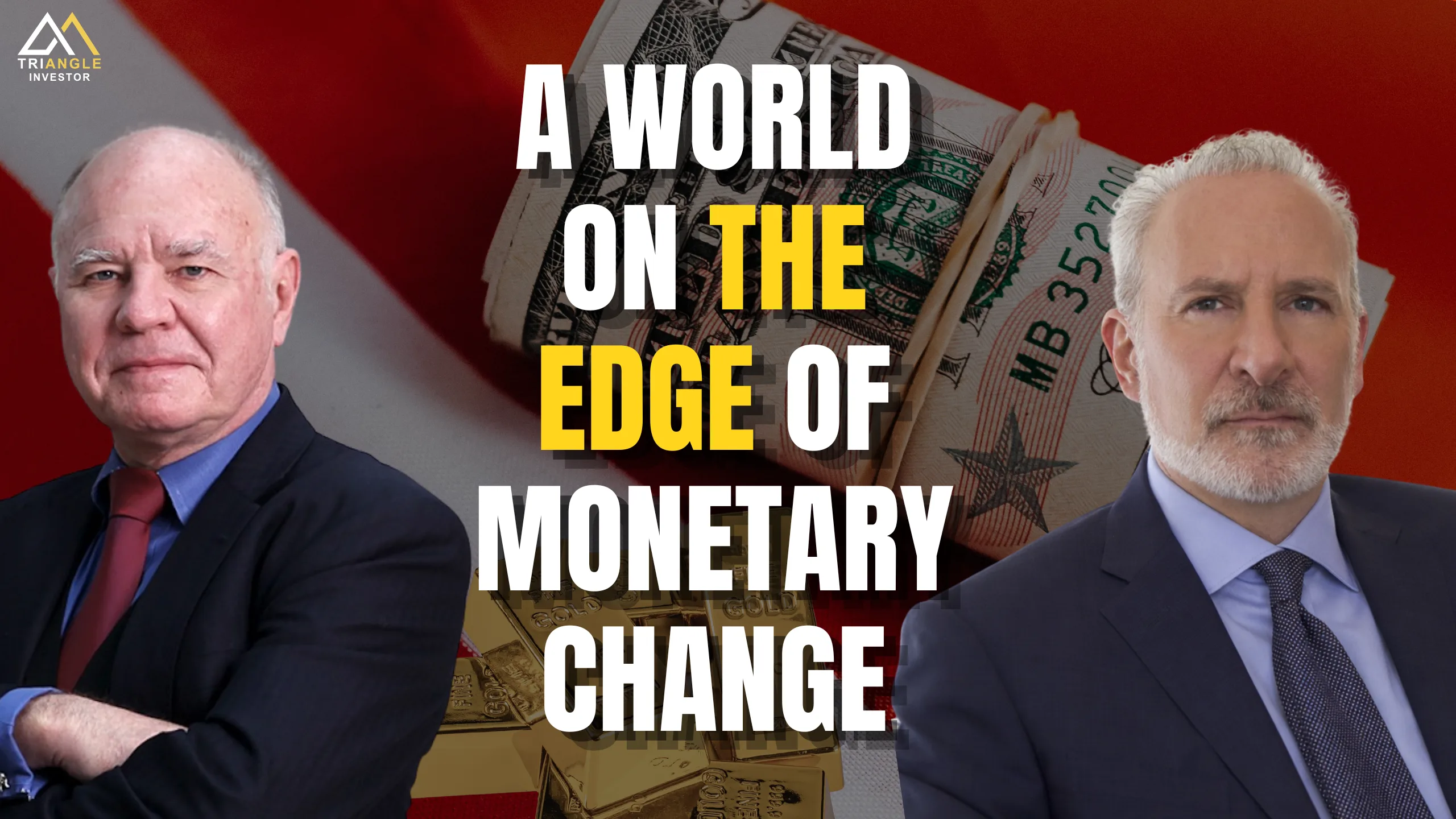
In a pair of recent discussions on my channel, two of the most outspoken critics of modern monetary policy—economist Peter Schiff and investor Marc Faber—offered their perspectives on the global economy, inflation, debt, precious metals, and the future of financial markets.
Both men have built reputations as contrarians. Schiff is known for his long-standing criticism of fiat currencies and advocacy of gold and sound money. Faber, often called “Dr. Doom,” has warned for decades about excessive debt, central bank intervention, and the fragility of the global financial system.
While their arguments differ in tone and emphasis, the two interviews reveal a remarkably consistent worldview: the modern economic system is sustained by debt expansion and monetary creation, and the consequences of that system are approaching a critical point.
One of the central themes in Schiff’s interview was the widespread misunderstanding of inflation.
According to Schiff, inflation is not rising consumer prices but the expansion of money and credit itself. Price increases are merely the consequence.
He argues that the public debate is distorted because policymakers and economists focus on metrics like the Consumer Price Index (CPI), which he believes understates real price increases.
In Schiff’s view:
Government measurements underestimate inflation.
Productivity improvements (such as AI) should naturally lower prices.
Government money creation prevents these price declines.
As a result, consumers are effectively losing purchasing power even when official inflation statistics appear modest.
Marc Faber shares a similar concern, though he frames it differently. For him, the scale of government debt and deficits across Western economies means that continued monetary expansion is unavoidable. Governments simply cannot service their obligations without ongoing money creation.
In his words, the money printing press cannot realistically stop without collapsing the system.
Both Schiff and Faber emphasize the enormous scale of government debt.
The United States alone now carries nearly $39 trillion in federal debt, with interest payments becoming one of the largest items in the federal budget.
Schiff believes the debt dynamic will inevitably accelerate:
Rising interest rates increase borrowing costs.
Budget deficits continue expanding.
Governments borrow even more to cover interest payments.
Eventually, he argues, the system could trigger a crisis of confidence in the U.S. dollar.
Faber sees the same structural problem globally. Western governments routinely spend far more than they collect through taxes, creating permanent budget deficits.
Politically, he argues, elected governments have little incentive to solve the problem.
Instead, they postpone it.
Each administration pushes the consequences further into the future, leaving larger problems for their successors.
Central banks often claim to stabilize markets and control economic cycles.
Faber disagrees.
He argues that central banks have never truly controlled markets—they have only influenced them.
Even massive money creation does not affect all assets equally.
For example:
Some stocks surge while others stagnate.
Precious metals may rise faster than equities.
Certain asset classes collapse despite monetary stimulus.
He points to commercial real estate as a striking example. In some markets, property values have fallen dramatically—even as central banks continued printing money.
This uneven distribution of liquidity creates distortions across the economy and financial markets.
Both Schiff and Faber believe the rising price of gold carries an important message.
For Schiff, gold’s strength signals declining confidence in fiat currencies, especially the U.S. dollar.
Central banks around the world have increasingly diversified their reserves away from dollars and toward gold.
This shift suggests a broader skepticism toward the current monetary system.
Schiff sees gold not as a speculative asset but as a warning indicator.
If gold prices rise dramatically—potentially to $10,000 or even $20,000 per ounce—it would likely reflect a major devaluation of the dollar.
Faber also views gold as a form of stable currency in an unstable world. While governments can manipulate prices in the short term, he argues that long-term manipulation of gold’s value is impossible.
As a result, gold remains one of the few assets capable of preserving purchasing power over time.
Both interviews also highlighted the potential role of other precious metals.
Schiff believes silver could experience a dramatic surge if a dollar crisis emerges. Industrial demand—particularly from emerging technologies like artificial intelligence and electronics—could compound the effect.
Faber goes even further.
He predicts that silver may outperform gold over the coming years, with platinum potentially outperforming both.
Beyond precious metals, he also notes that many commodities remain historically cheap relative to gold, including:
Oil
Agricultural products
Basic resources
If inflation accelerates, these sectors could experience renewed interest from investors.
One of the most striking disagreements in modern finance concerns Bitcoin and cryptocurrencies.
Peter Schiff has long been one of Bitcoin’s most vocal critics.
He argues that Bitcoin’s value depends entirely on continued inflows of new buyers. If investor demand slows, prices could collapse dramatically.
Schiff believes Bitcoin could eventually lose 90–99% of its value, calling it one of the most irrational bubbles in modern financial history.
He compares the phenomenon to historical manias like the Dutch tulip bubble.
Faber does not dismiss cryptocurrencies entirely but remains skeptical of their long-term role as a store of value.
His argument focuses on practical realities.
In times of crisis—when infrastructure fails or internet access disappears—digital assets may become inaccessible.
Physical assets, particularly precious metals, may prove more reliable under such conditions.
Real estate markets were another area of concern.
Schiff believes both residential and commercial property prices have been artificially inflated by years of extremely low interest rates.
When borrowing costs rise, affordability collapses.
In his view, U.S. housing prices may need to fall as much as one-third to return to sustainable levels.
Faber agrees that commercial real estate faces serious structural challenges.
Remote work, e-commerce, and artificial intelligence are reducing demand for office and retail space.
In parts of Europe, demographic decline has already emptied entire towns and villages.
These long-term trends suggest that some property markets may struggle for decades.
Both men also touched on geopolitical shifts.
Faber warned that global tensions—particularly in the Middle East—could escalate into broader conflicts.
Wars historically produce inflation, higher commodity prices, and financial instability.
He also believes the United States risks losing global prestige if it continues intervening in foreign governments.
Schiff sees similar risks emerging from economic policies.
Freezing foreign reserves and weaponizing the global financial system may encourage other countries to diversify away from the dollar.
The result could be a gradual—or sudden—transition toward a multipolar monetary system.
When asked how investors should prepare, both analysts offered pragmatic advice.
Schiff recommends focusing on assets that preserve purchasing power:
Gold
Silver
Commodity-related investments
Faber advocates diversification across several categories:
Precious metals
Stocks in stable industries
Real assets
Cash reserves
Interestingly, Faber also defended holding some cash—even though inflation erodes its value.
Cash provides optionality.
In a major market correction, investors with liquidity can buy assets at depressed prices.
Despite their warnings, neither Schiff nor Faber claims to know exactly how the future will unfold.
Faber in particular emphasizes uncertainty.
Government intervention, geopolitical conflicts, and financial instability make long-term forecasting extremely difficult.
What both economists agree on, however, is that the financial system is entering a period of greater volatility and structural change.
The era of easy monetary policy and ever-rising asset prices may be coming to an end.
In its place may emerge a world where:
Debt burdens dominate economic policy
Currencies gradually lose purchasing power
Precious metals regain monetary relevance
Financial markets become increasingly unstable
For investors, the challenge is not predicting every outcome.
It is preparing for a world where the old assumptions about money, markets, and economic stability may no longer hold.