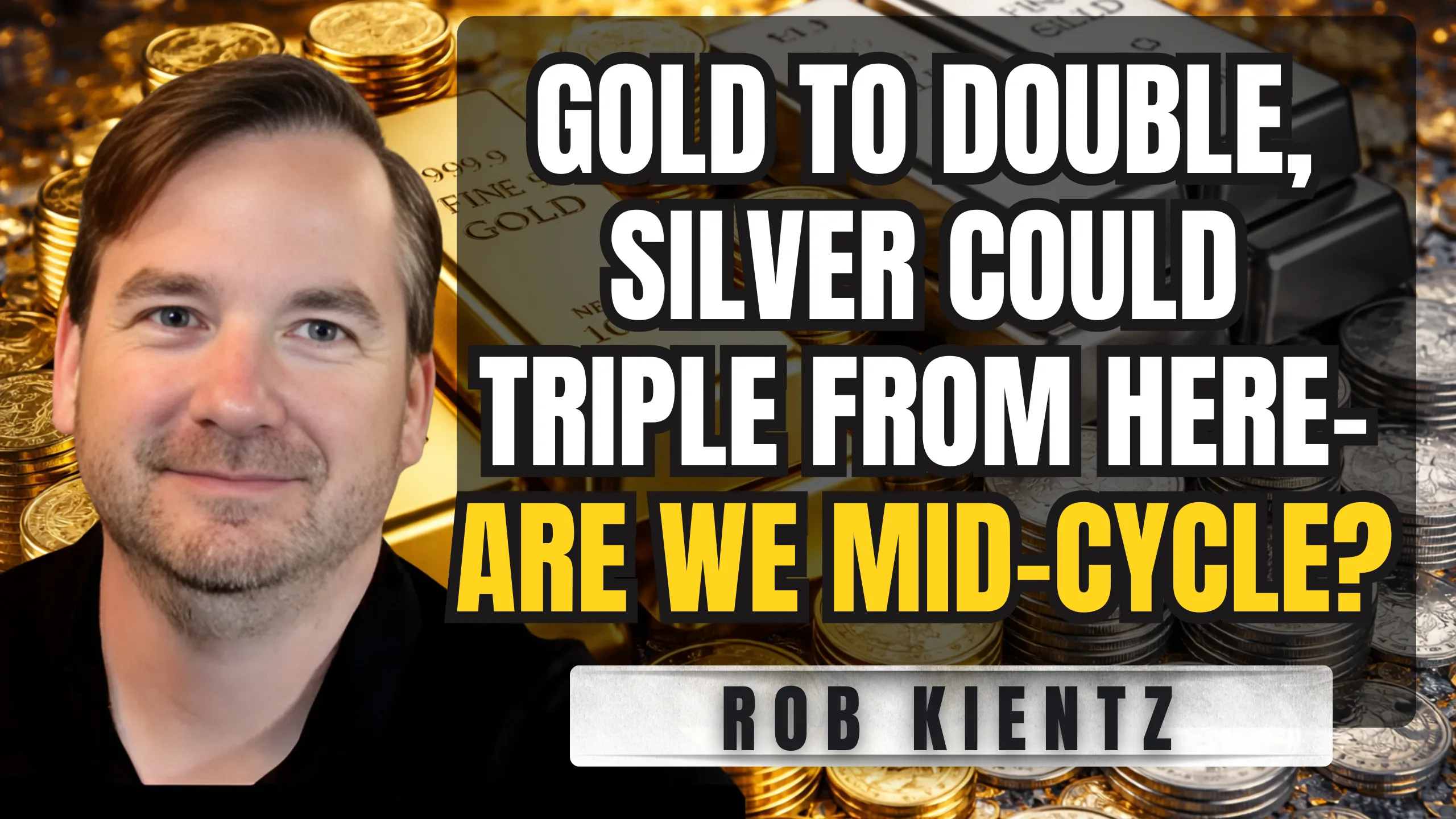
In a recent in-depth conversation, we sat down with precious metals expert Robert Kientz to unpack the recent turbulence in gold and silver markets—and what it could mean for investors moving forward.
From derivative-driven price swings to geopolitical tensions and the rise of BRICS influence, this discussion offers a comprehensive look at where precious metals stand today and where they may be headed next.
Understanding the Recent Gold and Silver Volatility
Despite a seemingly supportive macroeconomic environment—characterized by inflation concerns, geopolitical instability, and economic uncertainty—gold and silver prices have experienced sharp volatility.
According to Robert Kientz, this is not only expected but inevitable in today’s market structure.
The Key Reason: Derivative Markets Dominate Pricing
Gold and silver prices are largely determined by futures and derivative markets, particularly:
- COMEX (U.S.)
- London OTC market
These are not physical markets. Instead, they are paper-based betting systems where large institutions speculate on future prices.
Important insight:
Physical buying and selling of metals does NOT directly set the price.
This disconnect explains why prices can move violently—even when physical demand remains strong.
The January 30 Crash: What Really Happened?
One of the most significant recent events was the sharp drop in gold and silver prices on January 30.
Key Drivers Behind the Crash
- Long Position Liquidation
- Markets had been in a prolonged bullish trend.
- Too many traders were positioned “long.”
- When prices started falling, a cascade began.
- Margin Calls
- As prices dropped, traders lost capital.
- Exchanges automatically closed positions when margin requirements weren’t met.
- This accelerated the sell-off.
- Algorithmic Trading
- Automated systems amplified the downward momentum.
- Selling triggered more selling.
- Falling Open Interest
- Indicates longs exiting positions (not new shorts entering).
The Bigger Picture
This was not manipulation alone—it was a natural market clearing event after an overheated rally.
Macro Forces Shaping the Precious Metals Market
Several global factors are currently influencing gold and silver:
1. Federal Reserve Uncertainty
- Inflation remains sticky.
- Employment data is weakening.
- The Fed may delay rate cuts until 2027.
Market impact:
- Higher rates reduce short-term appeal of gold.
- Uncertainty triggers volatility.
2. Geopolitical Tensions and Energy Inflation
- Conflict in the Middle East is affecting:
- Oil supply routes (e.g., Strait of Hormuz)
- Fertilizer and agriculture supply chains
Result:
- Rising energy and food inflation
- Increased economic uncertainty
3. Cross-Market Margin Calls
When investors lose money in one market (e.g., stocks or real estate), they often:
- Sell gold/silver positions
- Use funds to cover losses elsewhere
This creates temporary downward pressure on metals.
Turkey’s Gold Sales: Should Investors Be Concerned?
Turkey recently sold around 60 tons of gold, raising questions about global impact.
Key Takeaways
- This reflects liquidity needs, not a loss of confidence in gold.
- The volume is not large enough to impact global pricing significantly.
- However, it can influence short-term trader sentiment.
Potential Risk: Regional Selling Cascade
If more countries (especially in the Middle East) begin selling gold to:
- Fund defense spending
- Stabilize economies
…it could create temporary pressure on prices.
Is Pricing Power Shifting from West to East?
One of the most important long-term themes discussed is the shift in pricing power.
China’s Role
China operates two systems:
- Shanghai Futures Exchange (SHFE) – derivatives
- Shanghai Gold Exchange (SGE) – physical market
Unlike Western markets, China has a strong physical delivery component.
What This Means
- Higher demand in China has led to price premiums
- Physical constraints (refining capacity, tariffs) limit arbitrage
- This creates regional price differences
The Rise of BRICS and a New Gold Market
A major structural shift could come from a BRICS-led precious metals exchange.
Why This Matters
If fully developed, this system could:
- Represent over 70% of global GDP
- Challenge COMEX and London dominance
- Emphasize physical pricing over derivatives
Long-Term Implication
A BRICS-driven market could:
- Increase transparency
- Reduce Western influence
- Push prices higher due to physical demand
Capital Rotation: A Hidden Catalyst for Gold and Silver
Global capital is beginning to shift—and gold and silver may benefit.
Where Money Is Leaving
- Real estate (especially in Europe)
- Bonds (notably U.S. Treasuries)
- Risk assets
Where Money Is Going
- Precious metals
- Energy
- Defensive sectors
Why This Matters
Gold and silver are viewed as:
- Safe-haven assets
- Protection against systemic risk
As uncertainty grows, capital inflows could accelerate dramatically.
Where Are We in the Gold and Silver Cycle?
According to Robert Kientz:
We are roughly in the middle phase of a long-term bull market.
Cycle Position
- Early phase: accumulation ✔️
- Middle phase: volatility and corrections (current stage)
- Final phase: explosive price movement (still ahead)
Price Outlook: What Could Happen Next?
Gold
- Potential to double from current levels
Silver
- Could triple or more, driven by:
- Industrial demand
- Supply constraints
- investor inflows
The Final Leg: Why the Biggest Move May Be Ahead
Several structural factors suggest a major breakout is still coming:
- Central banks accumulating gold
- Debt-based fiat systems under pressure
- Emergence of digital and gold-backed currencies
- Basel III regulations
- BRICS financial infrastructure
The Key Insight
The current volatility is “noise”—the real move has not started yet.
When the final phase begins:
- It will be rapid
- It will be global
- It will be difficult to stop
Conclusion: A Market in Transition
The gold and silver markets are undergoing a profound transformation:
- Short-term: volatility driven by derivatives and macro uncertainty
- Medium-term: capital rotation into safe assets
- Long-term: structural shift toward physical and Eastern markets
For investors, the message is clear:
- Expect continued turbulence
- Understand the mechanics behind price moves
- Focus on long-term fundamentals
The next major bull run in precious metals may not just be coming—it may already be quietly building beneath the surface.
Watch the interview: